Why the sinus matters
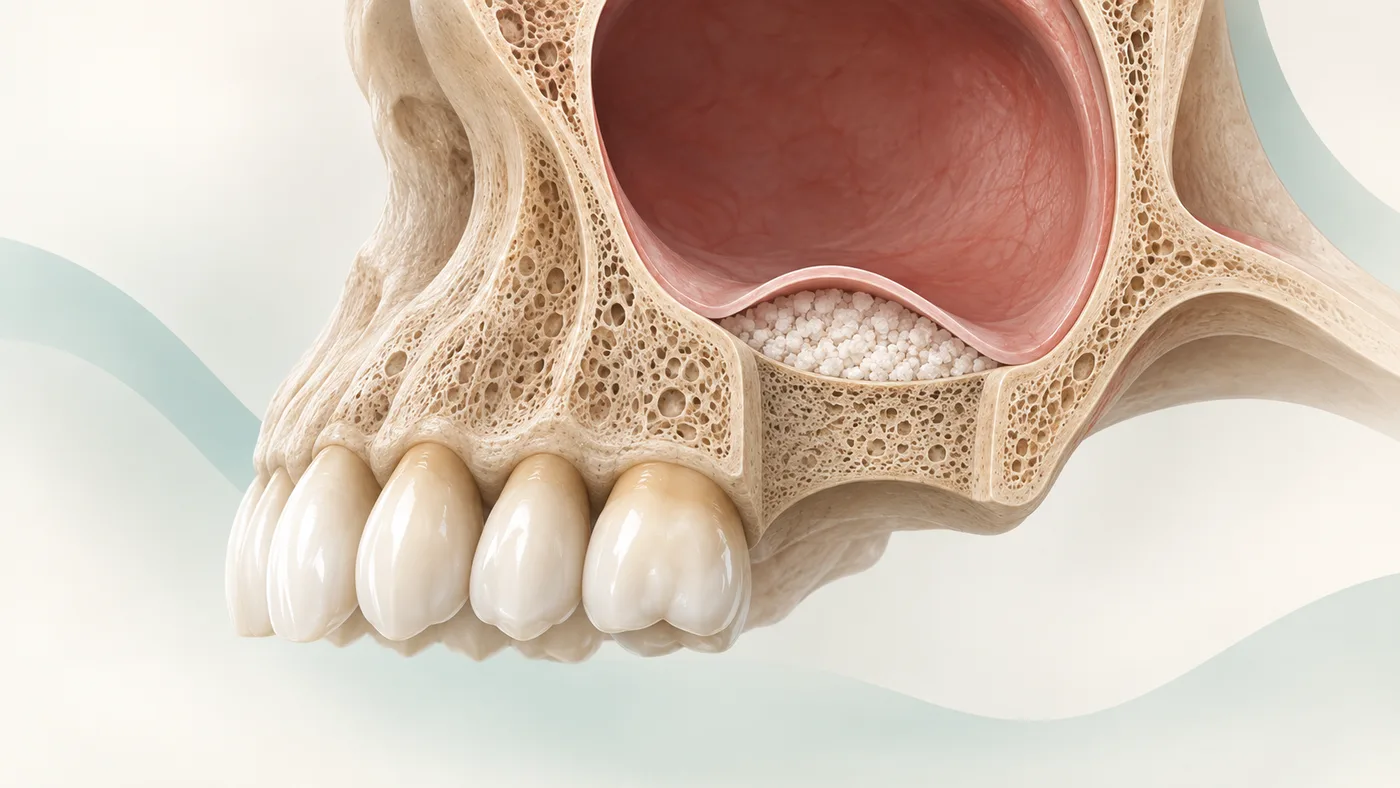
The maxillary sinus lies above the upper back teeth. After tooth loss, the remaining ridge may not provide enough bone height for a proposed implant. Assessment considers the distance to the sinus, ridge width and the health of the sinus and surrounding structures.
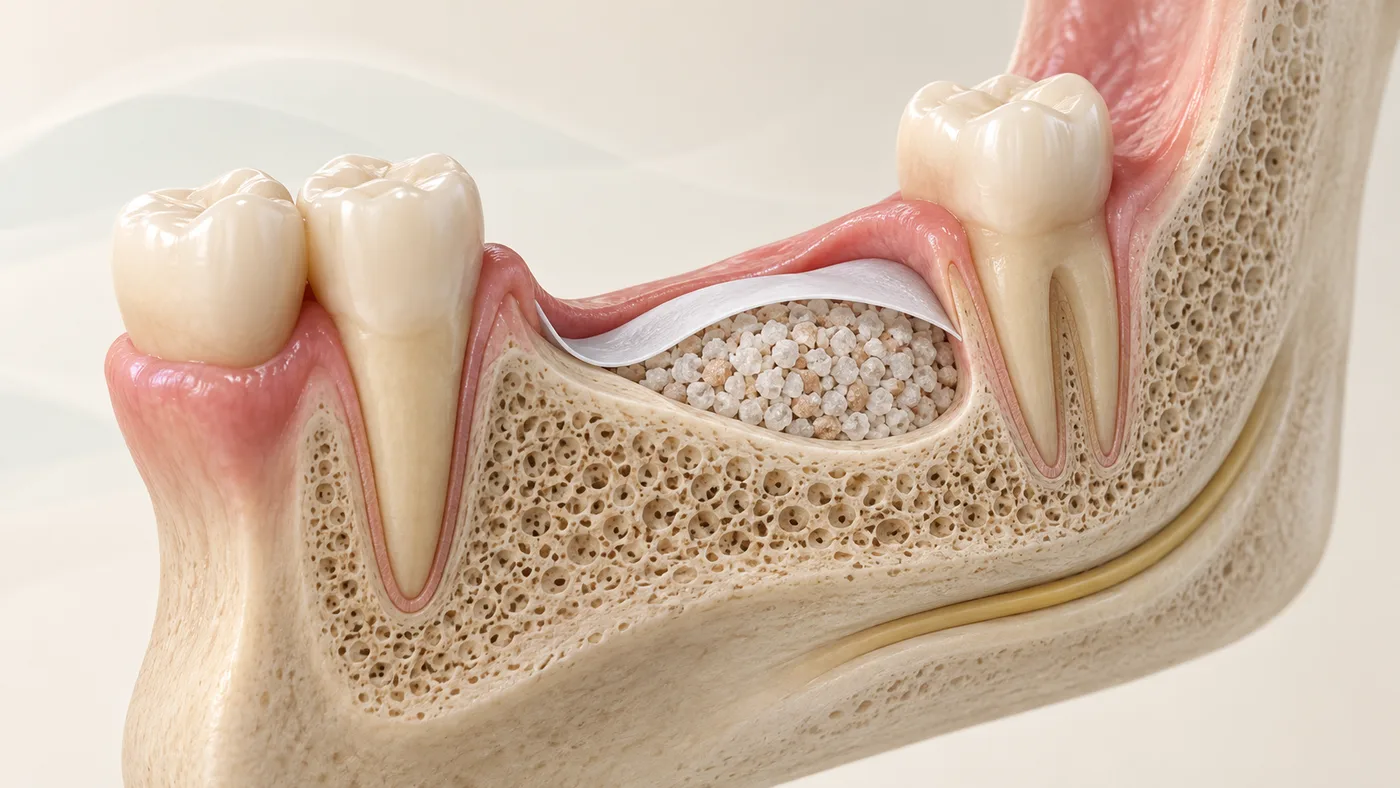
A sinus lift raises part of the sinus membrane to create space beneath it, often with graft material. It is a specific augmentation procedure, not a treatment automatically required for every upper implant.
Choosing an approach
Depending on the anatomy and the amount of augmentation needed, access may be through the implant site or through a lateral window. The implant may be placed during the same operation or after graft healing. This decision depends on whether adequate implant stability and a safe position can be achieved.
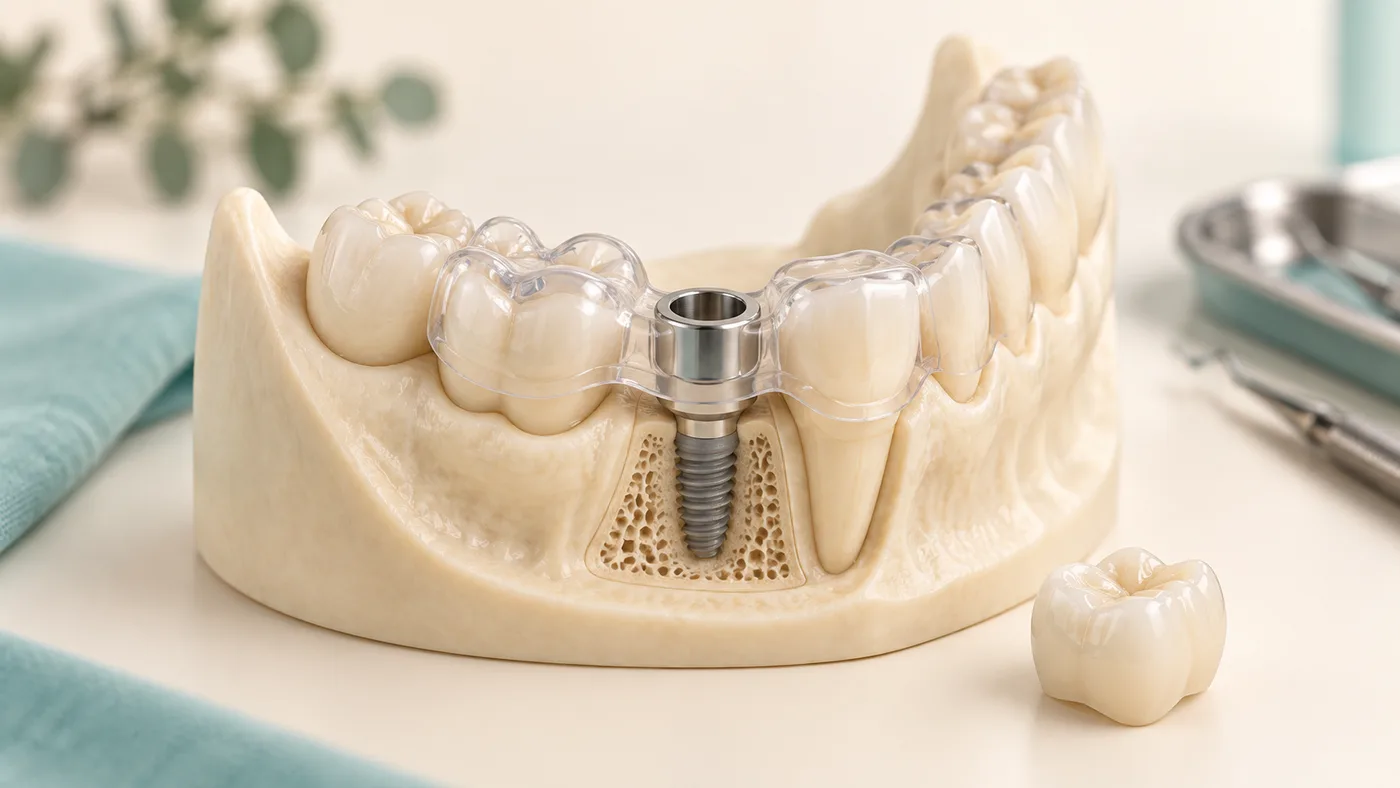
A shorter implant or a different restorative plan may sometimes be an alternative. The choice involves clinical trade-offs, not simply a preference for the largest implant.
What should be discussed beforehand?
Tell the surgeon about sinus symptoms, previous sinus treatment, medicines and smoking. Imaging should answer the planning question with an appropriate field and dose. Discuss the source of graft material if personal, religious or medical preferences matter to you.
Possible complications include membrane perforation, bleeding, infection, sinus symptoms and inadequate graft healing. Specialised instruments do not make these risks disappear.
Recovery follows the surgeon's instructions
You may receive restrictions intended to limit pressure across the healing site, including advice about nose blowing and sneezing. Follow the timing and medication instructions given for your procedure rather than a universal online schedule. Contact the treating team for worsening pain or swelling, fever, persistent bleeding or new concerning sinus symptoms.
Ask whether the surgery is essential to your preferred restoration, which alternatives are reasonable and how it affects the overall treatment timeline.