
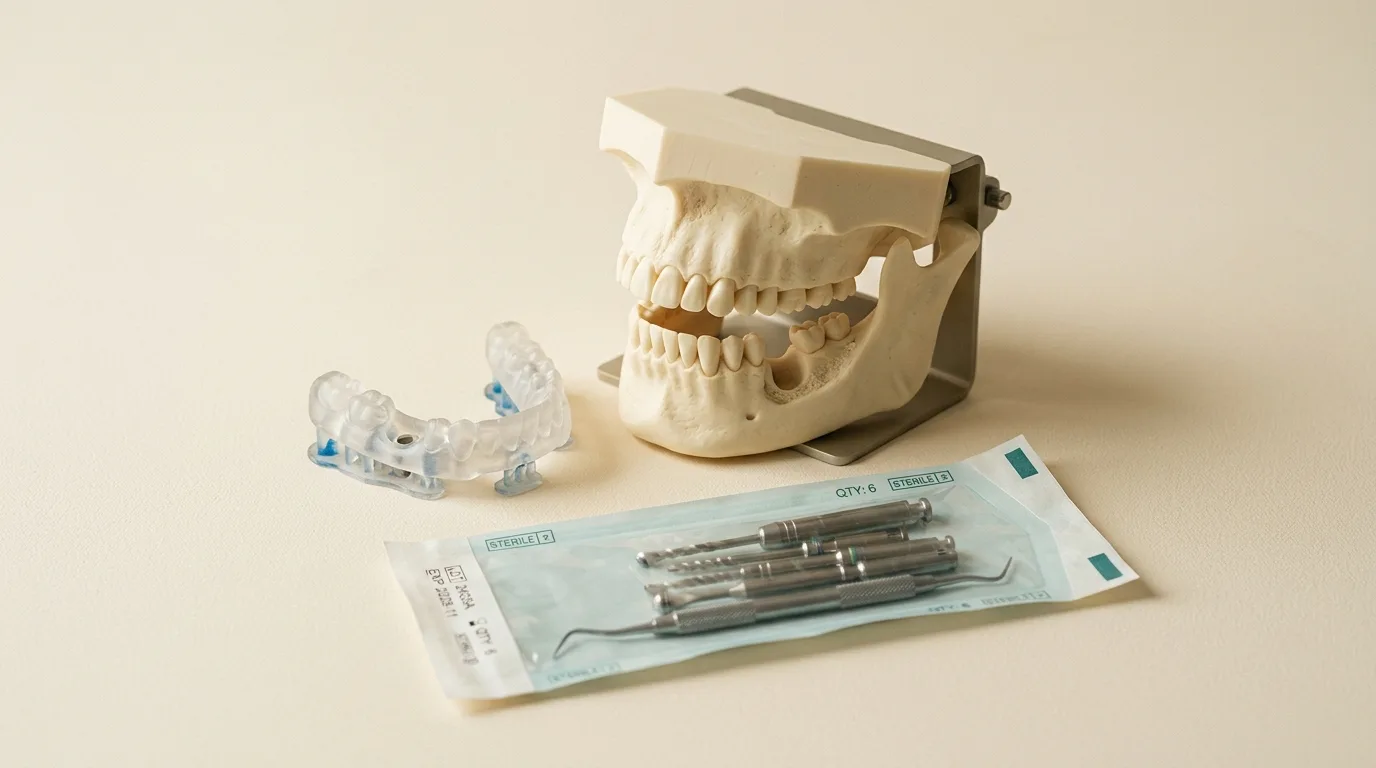
Match the procedure to the diagnosis
Oral surgery may involve an impacted tooth, a tooth that cannot be restored, bone or soft-tissue management, or preparation for an implant restoration. The label “advanced” does not establish that surgery is needed.
Prepare for the consultation
Bring a medication list and disclose bleeding conditions, diabetes, previous head-and-neck radiotherapy, and medicines used for osteoporosis or cancer. Do not stop prescribed anticoagulants or other medication without a coordinated clinical plan.
Imaging and alternatives
Selected imaging may help identify roots, nerves, sinuses, or bone defects. CBCT is used when the expected information justifies exposure; it is not an automatic scan for every visitor.
Ask about non-surgical alternatives, the purpose of grafting, donor or material sources where relevant, healing expectations, and possible changes to sensation.
Know the follow-up plan
You should receive procedure-specific aftercare and a way to seek advice. Rapidly increasing swelling or difficulty breathing or swallowing requires urgent emergency assessment.