
Restore chewing, speech, and appearance
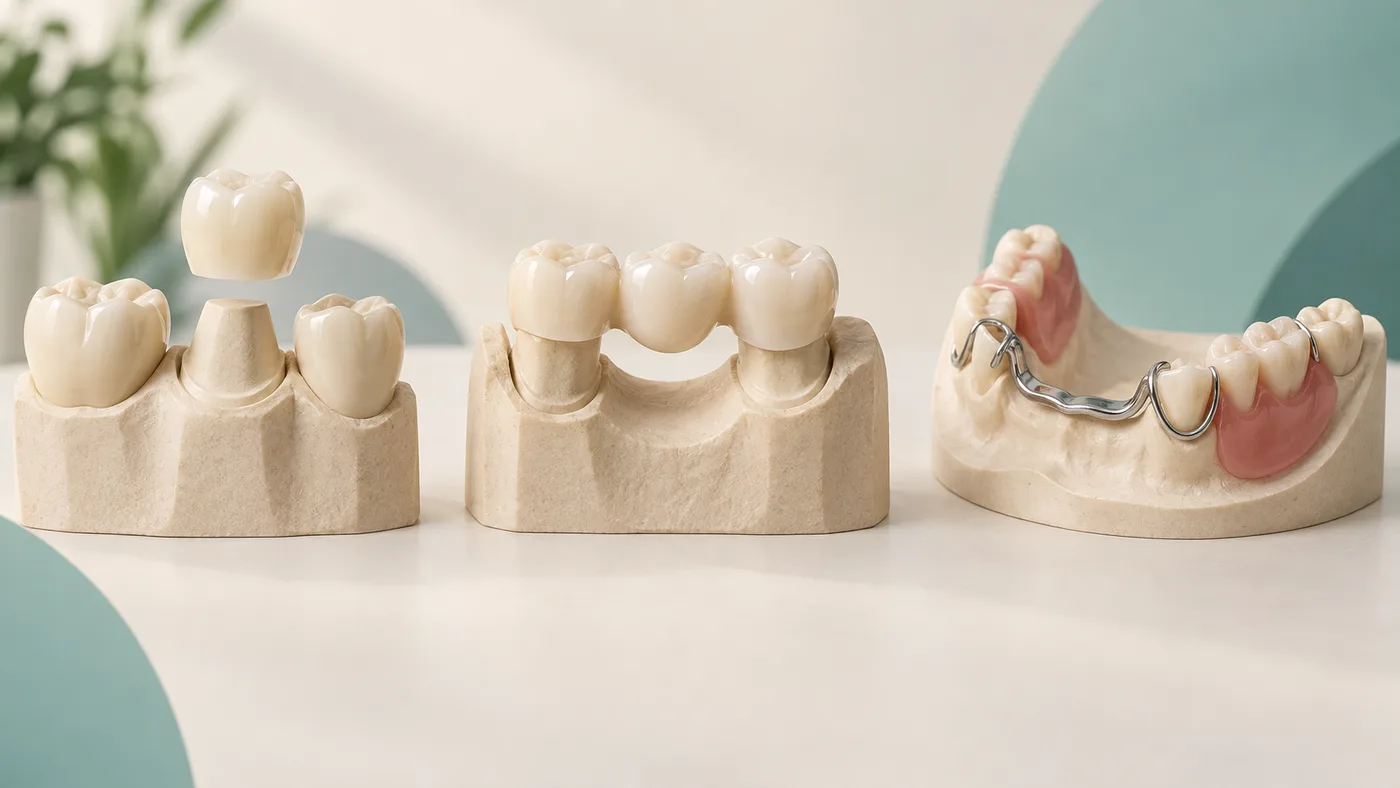
Prosthetic dentistry restores damaged teeth or replaces missing teeth. Options include tooth-supported crowns and bridges, removable dentures, and implant-supported restorations.
Choose the support before the material
A treatment decision begins with the condition of the remaining teeth and gums, the size of the gap, available space, and your ability to maintain the result. The visible ceramic is only one part of the restoration.
A crown covers a prepared tooth; a bridge replaces a gap using supporting teeth or implants; a removable denture is taken out for cleaning. An implant-supported fixed bridge is not removed at home.
What the examination considers
The dentist evaluates restorability, gum support, tooth mobility, bite forces, hygiene access, and expectations. A diagnostic trial may help assess speech, appearance, and chewing relationships before extensive work.
Long-term care
Restorations require maintenance. Natural teeth can still decay around margins, and supporting tissues can become inflamed. Ask about cleaning tools, recall intervals, repair options, and likely future replacement before deciding.