Two kinds of information
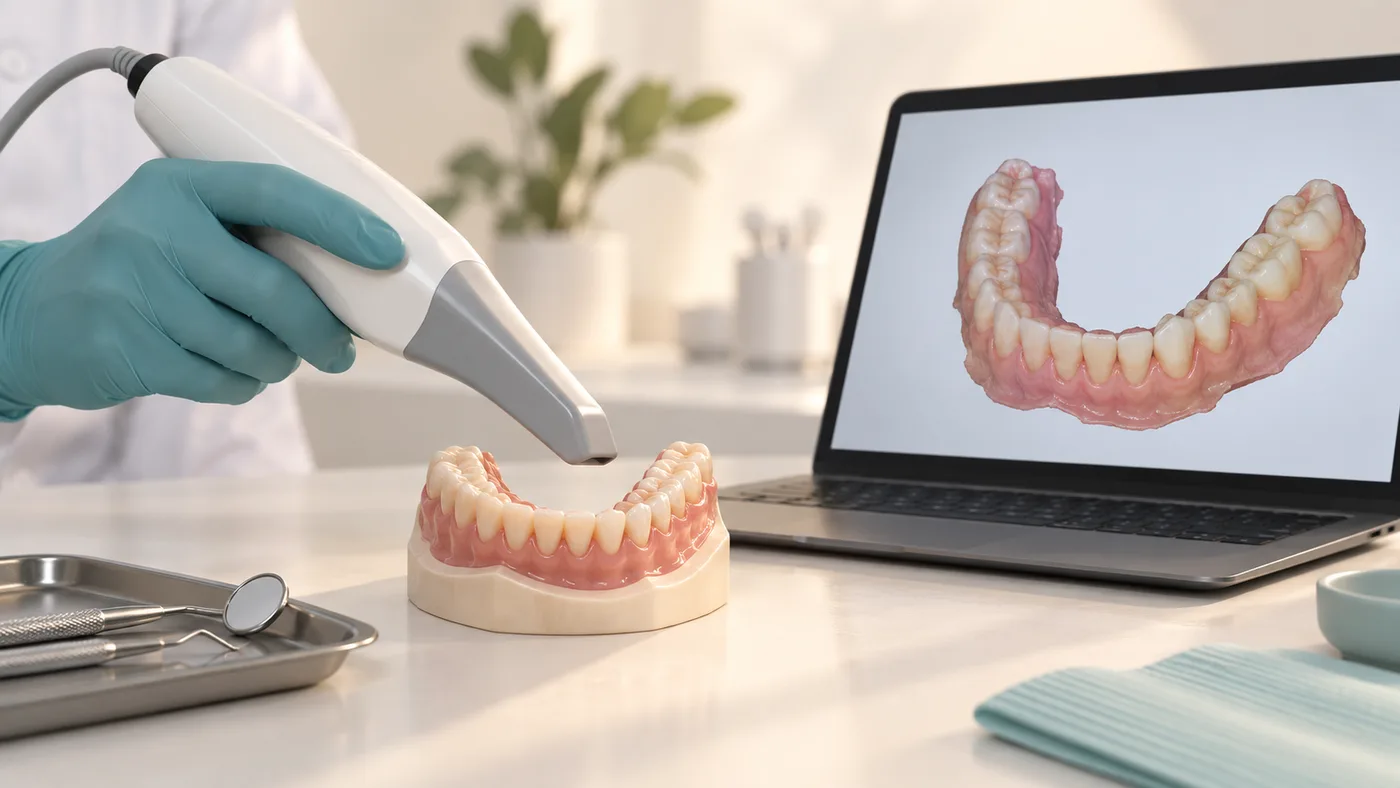
An optical scan records visible surfaces. A cone-beam CT examination, when justified, provides three-dimensional X-ray information about bone and relevant anatomy. These records answer different questions. Combining them can relate the planned replacement teeth to potential implant positions.
The process starts with examination and restorative planning. Software does not determine whether a tooth should be extracted or whether the patient is ready for surgery.
Planning from the restoration backwards
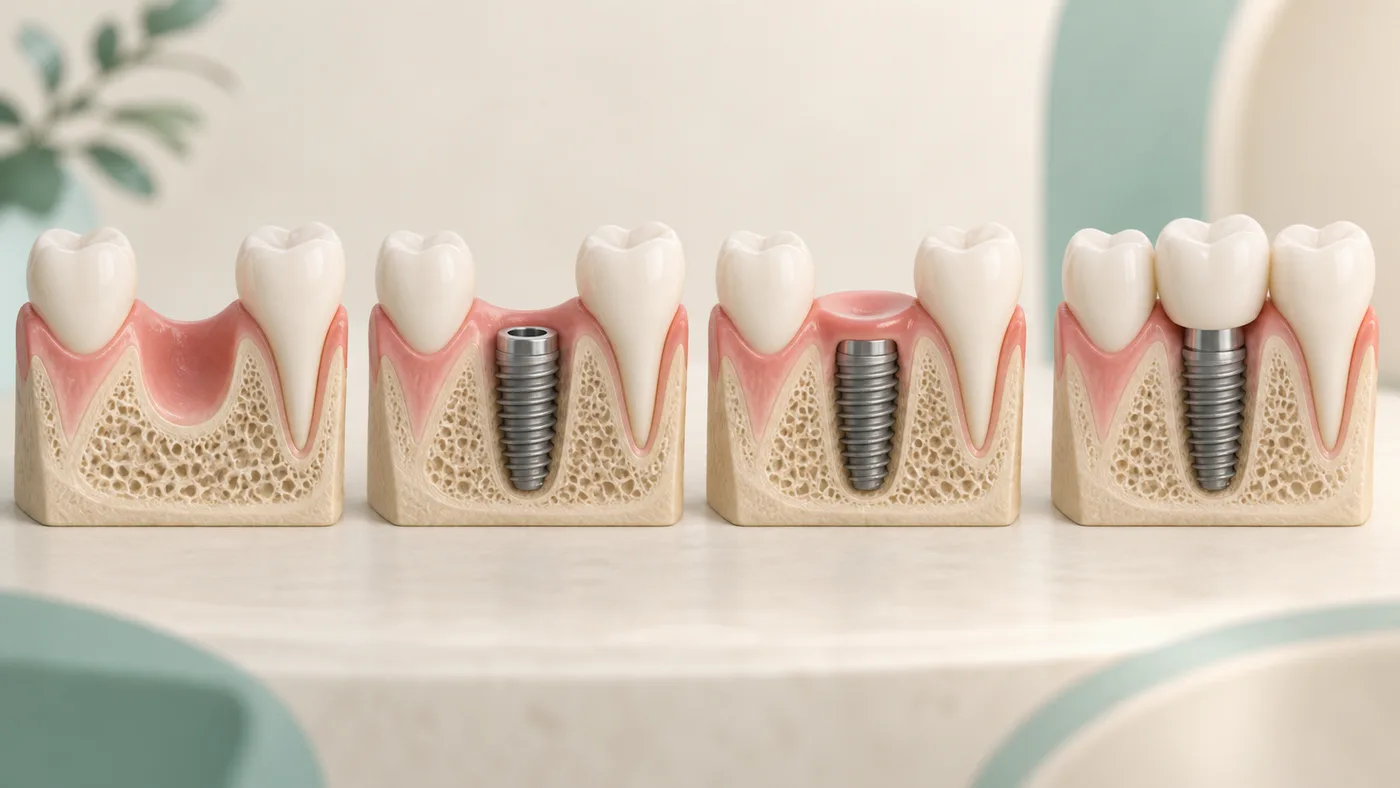
The team considers the intended tooth position, bite, soft tissues, implant angulation and access for the restoration. They also assess adjacent roots, nerves and the sinus where relevant. A plan must be surgically feasible and allow a restoration that can be maintained.
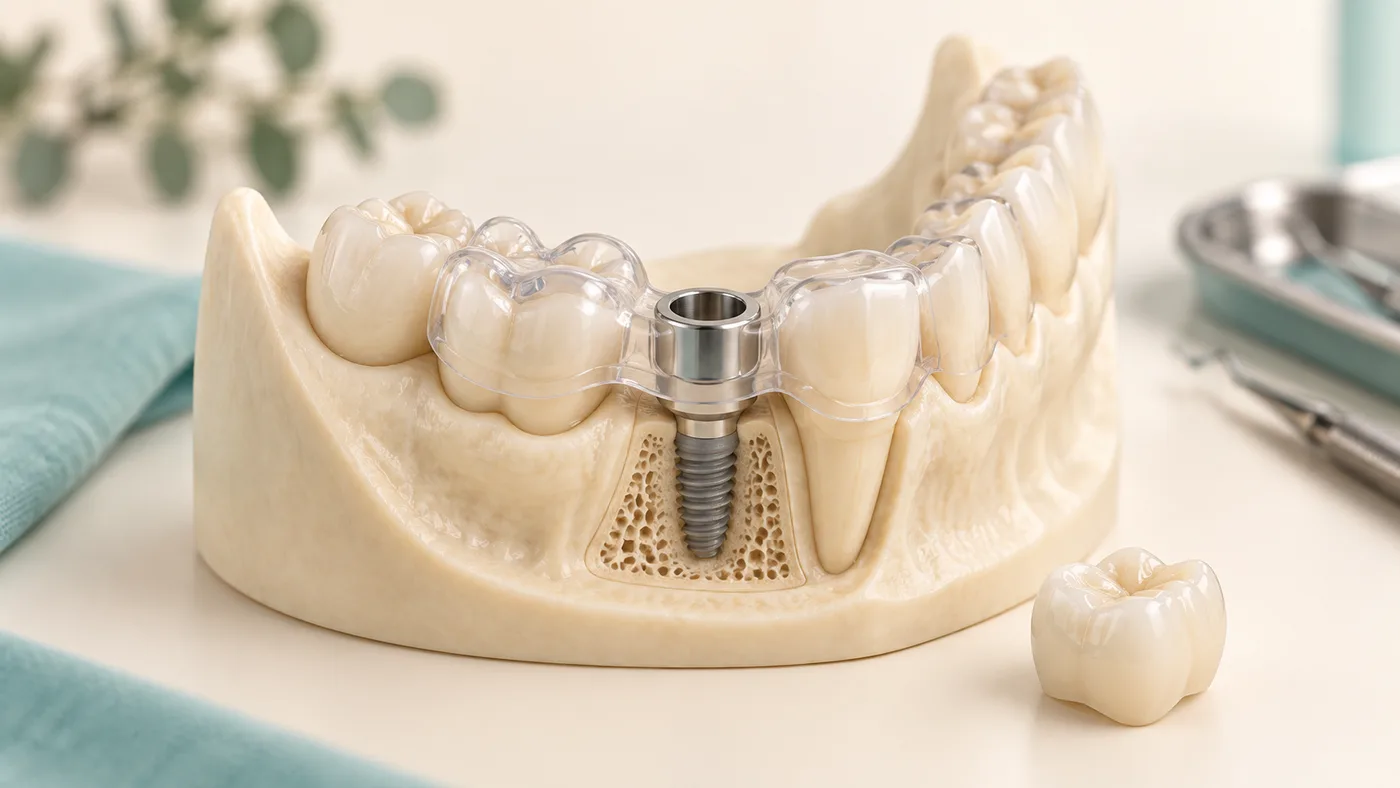
In a static guided workflow, a guide is designed to help transfer the plan. Other navigation approaches exist, but they are not interchangeable and should not be assumed to be available at every clinic.
Why guided surgery is still surgery
The guide assists instrument positioning; it does not remove the incision or drilling decision, eliminate error or guarantee healing. Some cases permit flapless access, while others need an opening to inspect or augment bone. Calling either approach “non-surgical implants” is misleading.
Record matching, guide design, manufacture, seating and movement can each affect accuracy. The surgeon checks fit, stability and access and must be able to change the plan when findings require it.
Imaging has a specific purpose
CBCT should not become an automatic repeated check at every follow-up. The clinician chooses imaging based on the question and whether it is likely to affect care. A surface scan has no ionising radiation; CBCT does. Tell the team about possible pregnancy so they can make an appropriate imaging decision.
Ask what the digital workflow contributes in your case, how the guide will be verified and what the alternative plan is if it cannot be used safely.