
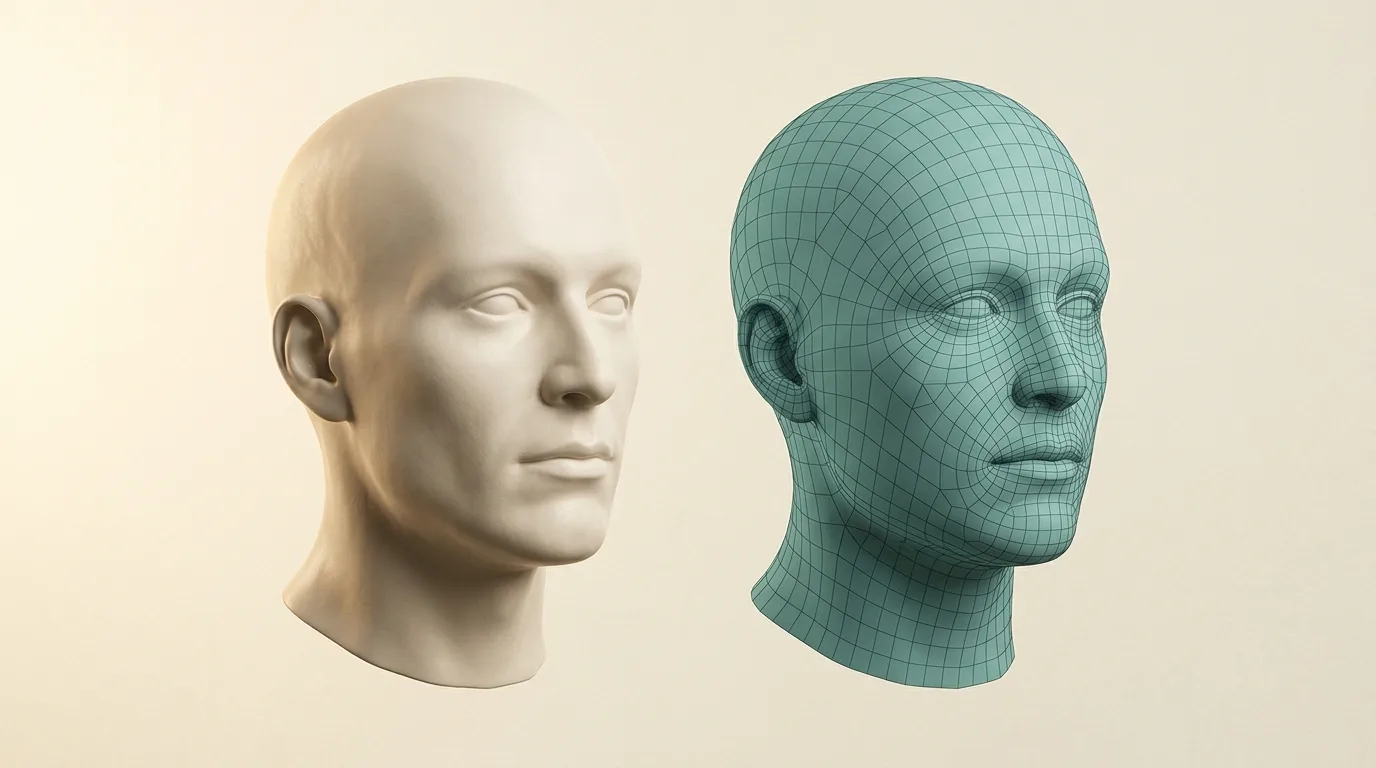
Record the smile in its facial context
A facial surface scan creates a three-dimensional record of external facial form. Combined with photographs and dental records, it can support discussion of tooth display, facial proportions, and restorative design.
A surface record has limits
Lip movement, facial expression, head position, and the alignment of separate records influence interpretation. A static model cannot fully capture how someone smiles or speaks.
What it does not replace
Facial scanning does not establish bone volume, diagnose every jaw problem, or predict biological healing. Examination, bite assessment, and other justified imaging remain separate decisions.
Evidence supporting a digital smile workflow should not be interpreted as proof that a facial scanner alone improves every treatment outcome. Ask how the additional record will help your particular plan and how facial data will be protected.