
Move teeth with a planned biological process
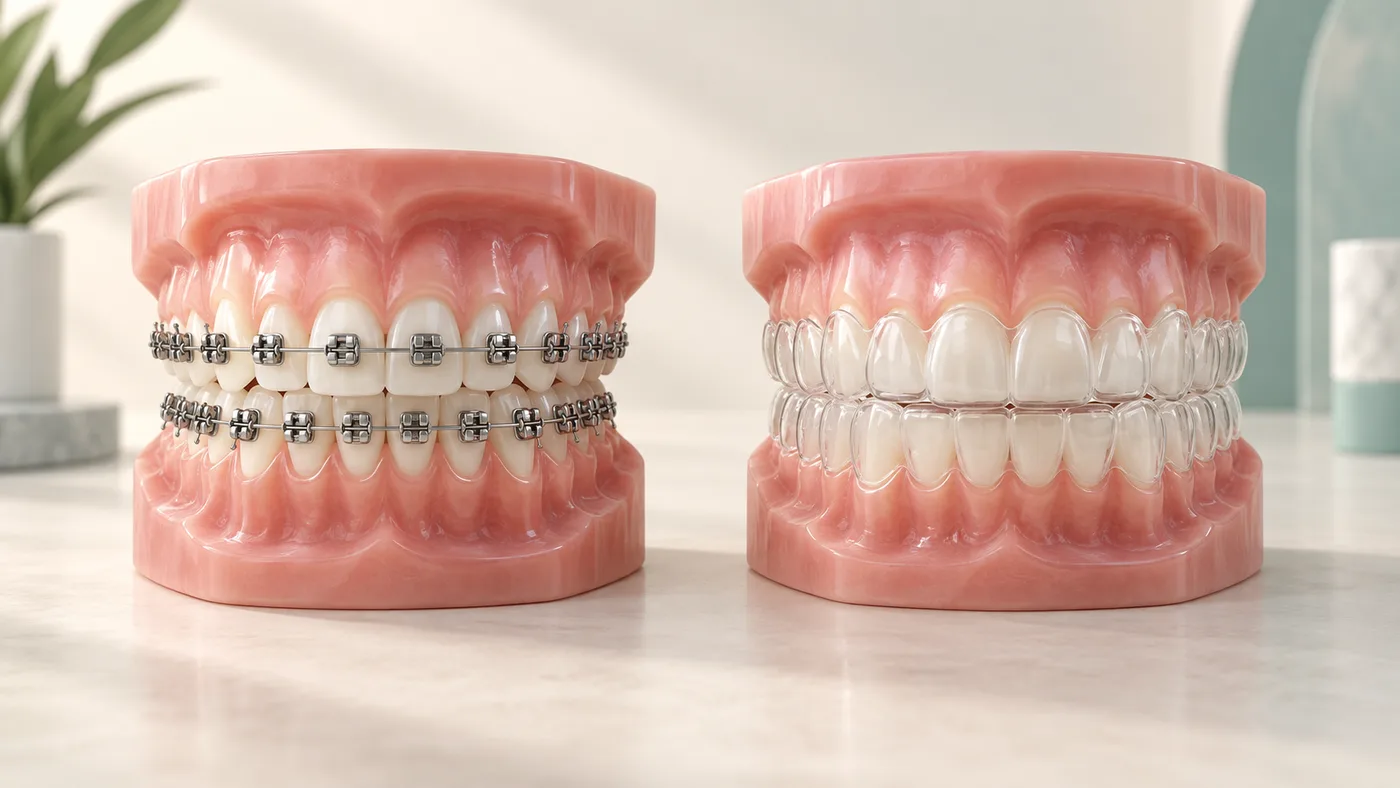
Orthodontics aims to improve tooth position and bite relationships. Treatment can use fixed braces, clear aligners, or other appliances according to the diagnosis.
Assessment comes before an appliance
The clinician evaluates the teeth, gum support, jaw relationships, and available space. Photographs, scans, and selected radiographs help when clinically indicated. Active decay and uncontrolled gum disease need attention before movement begins.
Responsibilities during treatment
Keep teeth and appliances clean, attend reviews, and follow appliance instructions. Risks can include enamel marks, gum problems, root shortening, discomfort, and relapse. Complex jaw discrepancies may need additional specialist assessment.
Retention is part of the plan
After active treatment, retainers help maintain the result. Ask about the recommended wear schedule, cleaning, replacement, and what to do if a retainer no longer fits.
No online photograph can reliably establish whether aligners, braces, or no treatment is the right choice.