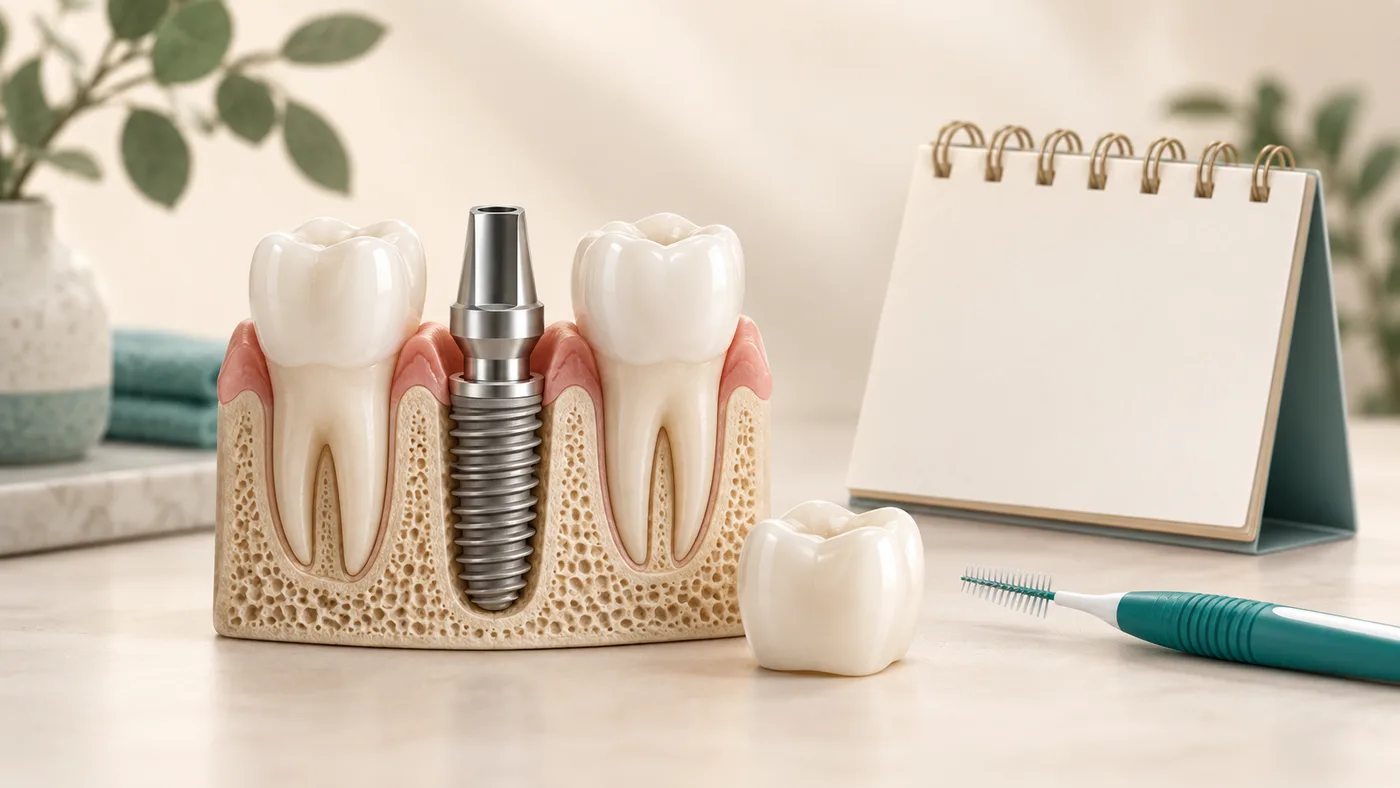
An implant cannot decay, but its supporting tissues can become diseased
Plaque can accumulate around an implant restoration. Inflammation limited to the soft tissues is termed peri-implant mucositis; peri-implantitis involves inflammation with progressive supporting bone loss. The distinction requires clinical assessment and, where indicated, comparison with imaging.
Symptoms should prompt a review
Bleeding during cleaning, swelling, discharge, persistent bad taste or a change in comfort deserves attention. Pain may be absent. Movement of the crown or bridge could relate to a component problem or something more serious; do not keep chewing on it while guessing the cause.
What the appointment evaluates
The team checks plaque control, tissue findings, access for cleaning, restoration contours and component stability. Previous records help interpret changes. Imaging is chosen to answer a clinical question rather than repeated automatically as CBCT.
Prevention is tailored to the restoration
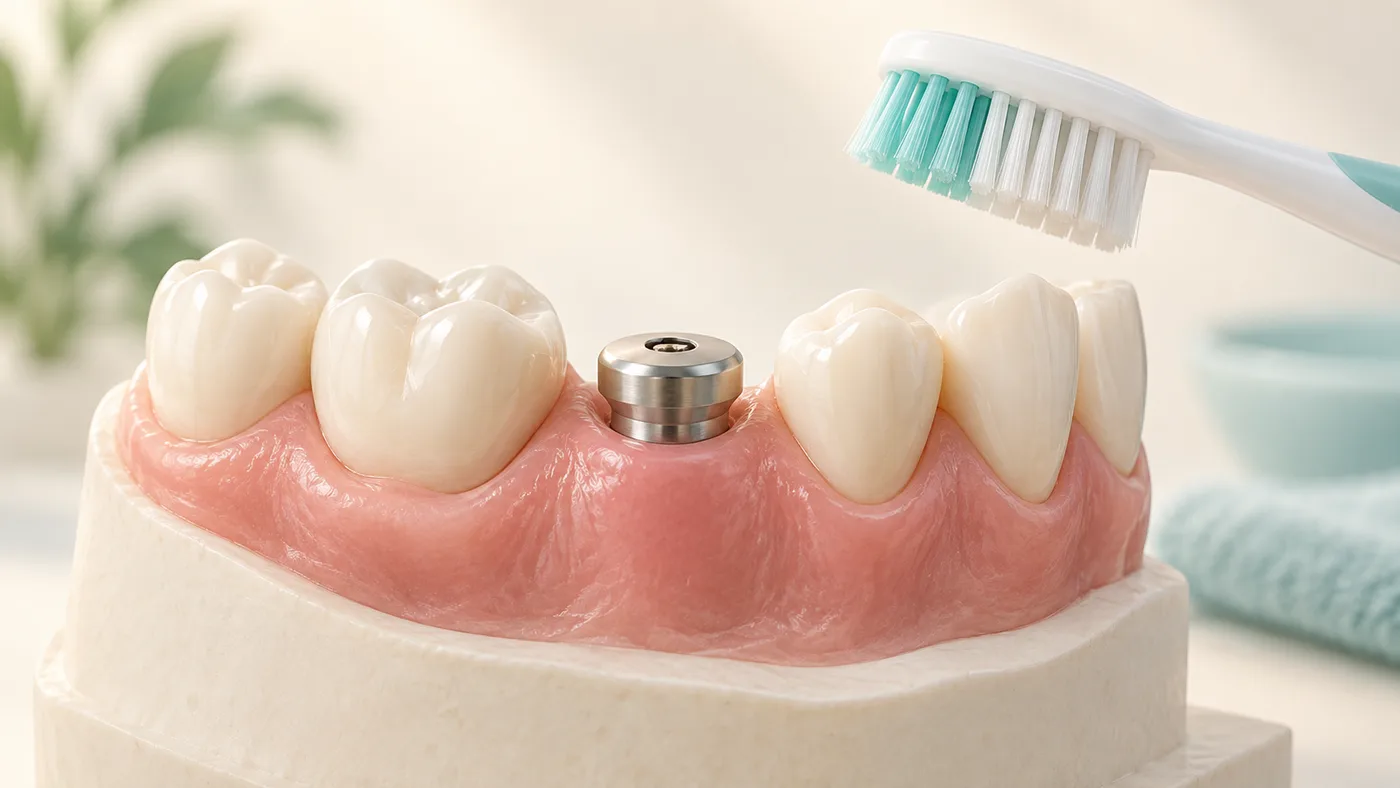
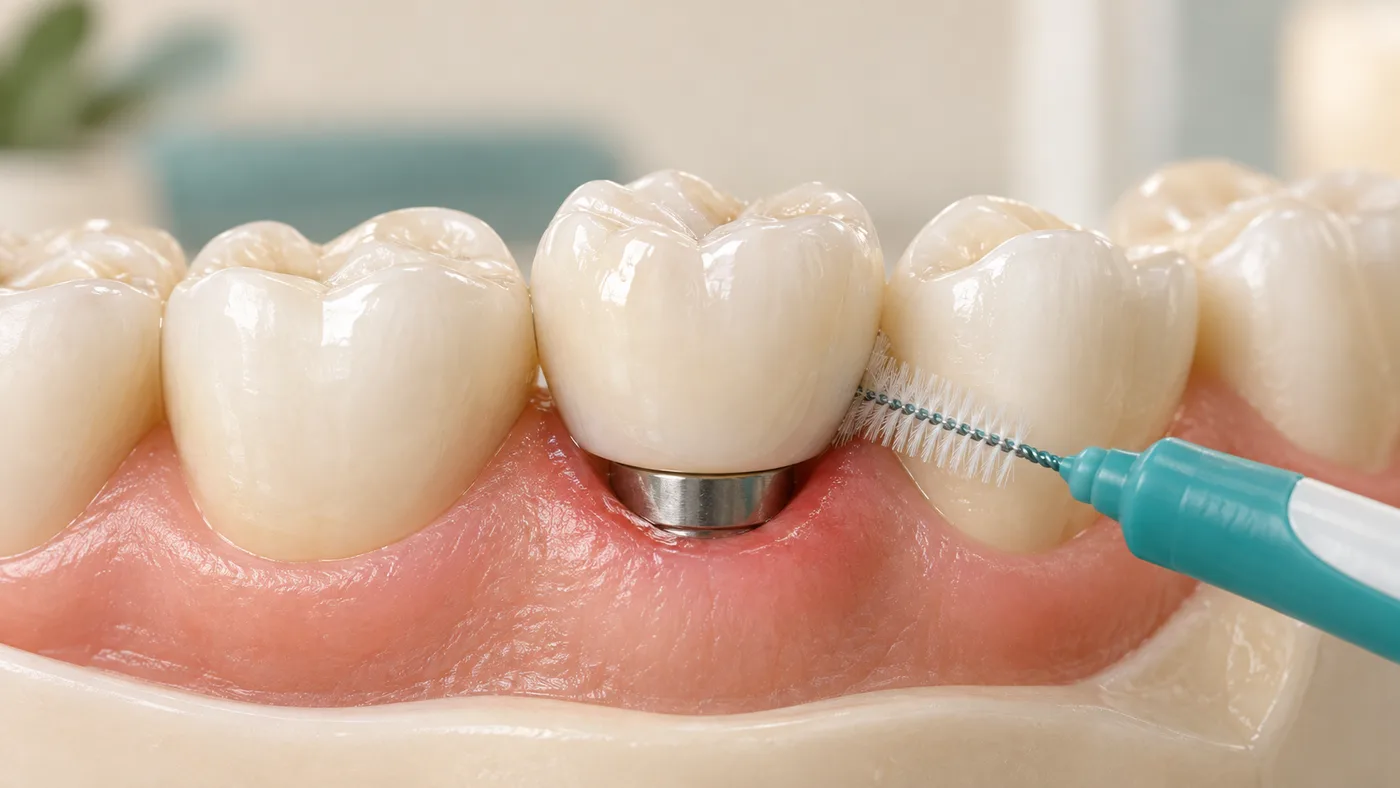
Brush and clean around the implants with the aids demonstrated for your design. A full-arch bridge needs access beneath it; a removable overdenture needs its own cleaning routine. Attend the recall interval recommended for your risk, including any history of periodontitis and smoking.
Treatment depends on the diagnosis and may include professional cleaning, improved access, risk-factor management and further therapy. A laser or mouthwash alone should not be presented as a universal cure. Arrange a review early rather than wait for pain or visible implant movement.