
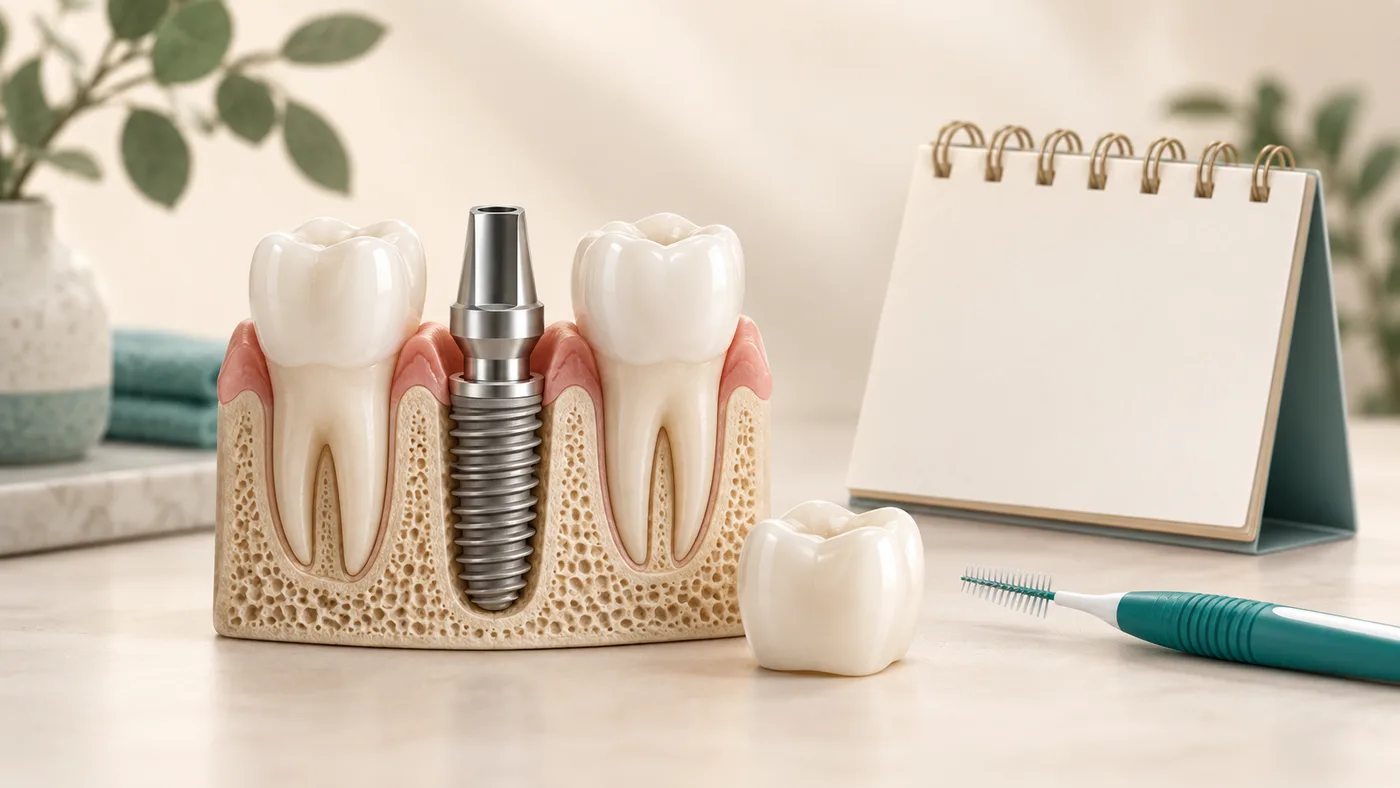
The implant and the crown have different lifecycles
An implant can remain integrated while its crown, screw, or attachment needs repair. Conversely, a restoration may look intact while the tissues around an implant are becoming diseased.
Survival is not the same as complication-free function
Research may report that a prosthesis remains in service even after repairs. Ask what an outcome statistic measures and how long patients were actually followed.
What influences maintenance?
Cleaning access, history of periodontal disease, smoking, general health, bite forces, restoration design, and follow-up all matter. A material's strength does not remove biological risk.
Notice changes early
Bleeding, pus, persistent discomfort, recession, or a moving component needs assessment. Problems may also develop without obvious pain, which is why professional review remains important.
Ask a better question
Instead of asking for a guaranteed lifespan, ask what maintenance is expected, which parts can be repaired, what follow-up is recommended, and what expenses may arise. A realistic care plan is more useful than a promise that treatment will last forever.
Separate the implant from its restoration
The fixture, abutment, screws and visible crown or bridge are different components. A restoration can need repair while the implant remains integrated. An implant can develop disease while its crown looks intact. “Still present” and “free of complications” are different outcomes.
A baseline and a repair plan
Follow-up compares tissue health, cleaning access, bite and components with earlier records; imaging is selected when indicated. Routine repeated CBCT is not a universal requirement. Ask about replacement components and how problems are assessed. A commercial guarantee cannot prevent biological disease and is not a scientific lifespan prediction.