
Separate four decisions
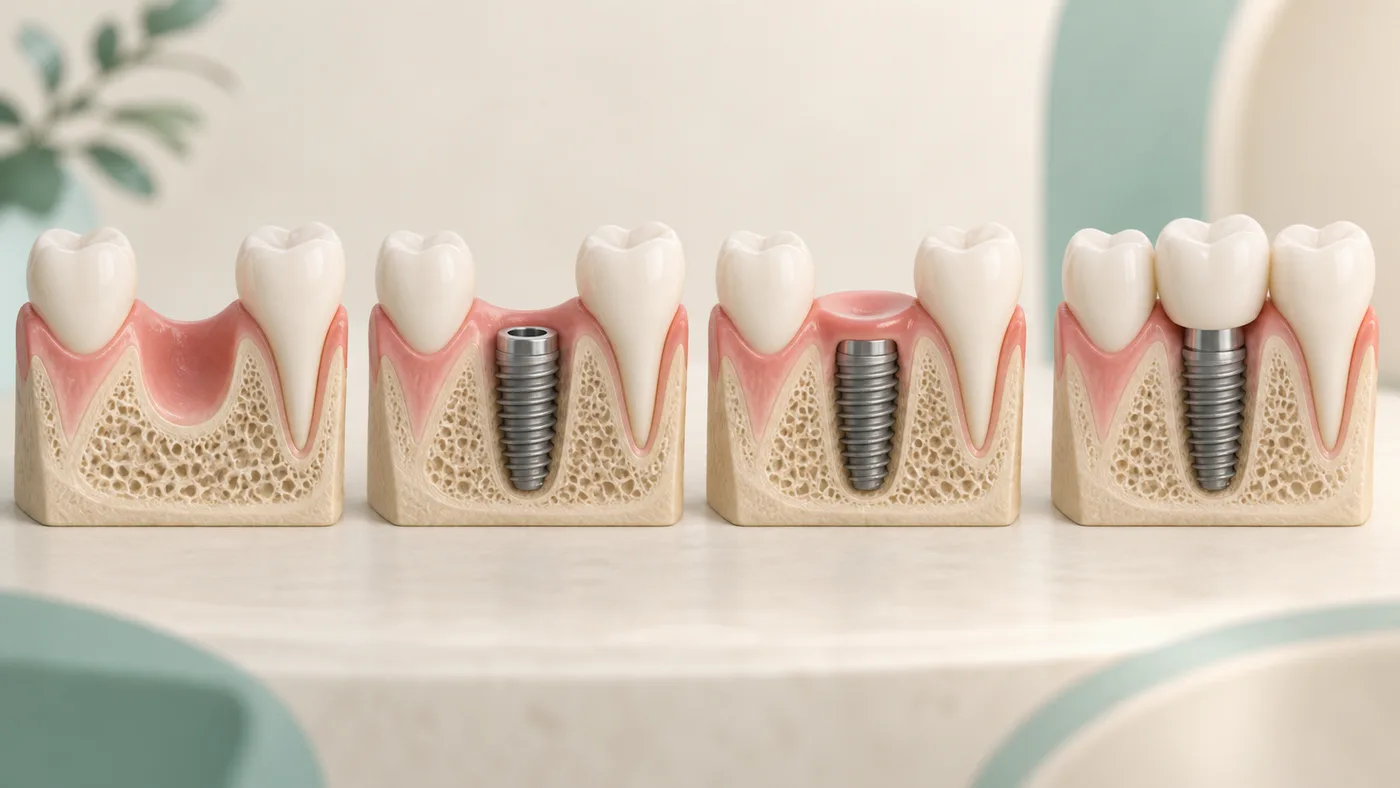
Implant treatment involves deciding whether a tooth needs replacement, when an implant can be placed, when a restoration can be attached, and when that restoration may carry functional load.
Placement timing
An implant may be placed at extraction or after a healing interval. Socket anatomy, infection management, soft tissue, and the ability to obtain a suitable position influence the decision. “Immediate” is not automatically better.
Loading timing
A temporary restoration may be connected early in selected cases, but this requires a separate assessment of stability, support, and biting forces. Immediate placement does not automatically permit immediate chewing.
The restorative phase
The team records implant position and the bite, shapes or assesses the tissues, and verifies the fit of the planned teeth. Extensive treatment may use a provisional phase before final manufacture.
Plan around milestones, not an advertisement
Ask what must be achieved before each stage, which appointment is surgical, when a temporary tooth is expected, and what could change the schedule. If you are traveling, allow for review and unexpected adjustments rather than booking to a guaranteed number of days.
How digital records fit into the sequence
An optical scan records tooth and tissue surfaces, while appropriate X-ray imaging assesses bone and relevant anatomy. These records support a restoration-led plan: the implant position should serve the replacement tooth, bite and cleaning access. A guide can help transfer the plan but does not remove surgical judgement.
What changes the timetable?
Extraction healing, grafting, gum disease control and implant stability may alter the sequence. A visible temporary tooth is not proof that unrestricted chewing is safe. Ask how readiness for each stage will be assessed and what the alternative is if healing is incomplete. The written plan should distinguish surgery, provisional teeth, final teeth and maintenance.