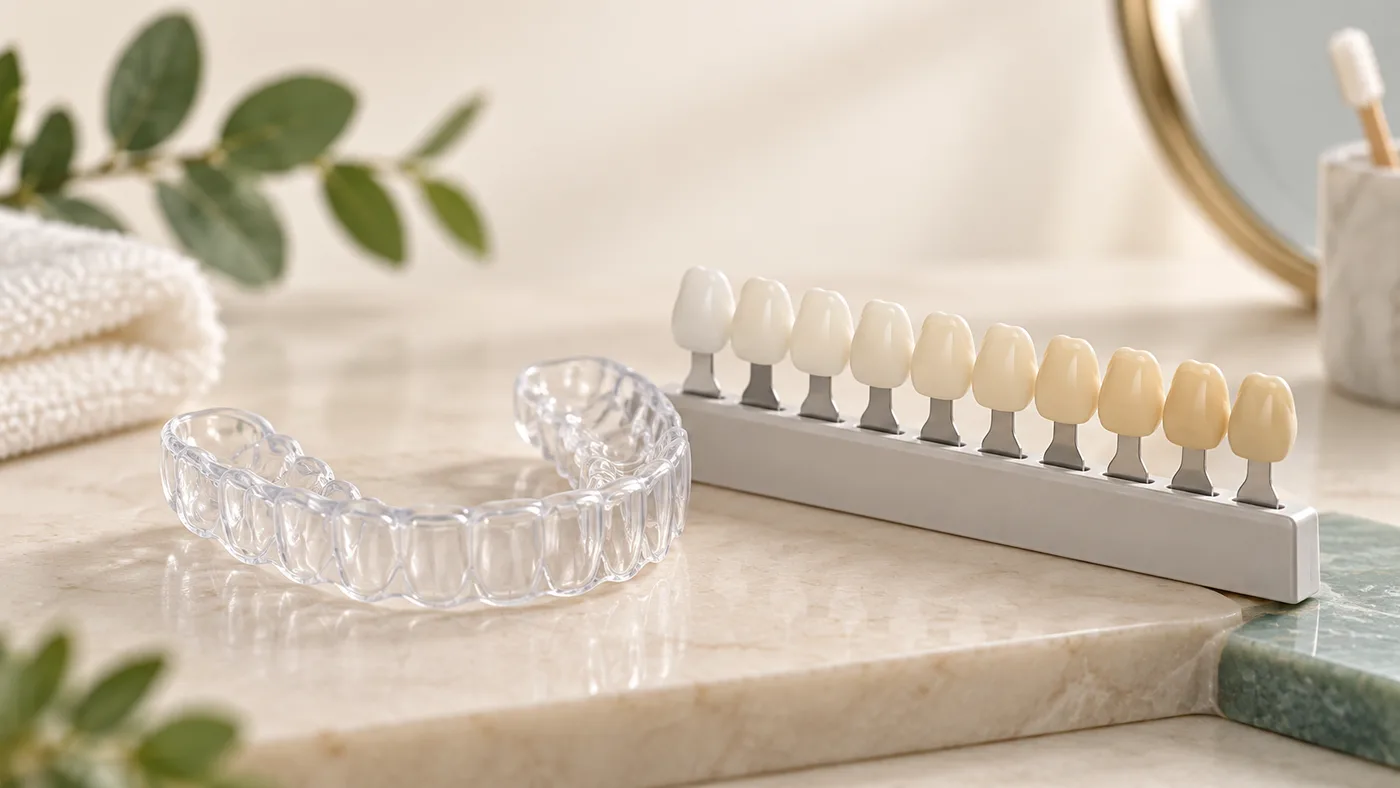
Surface stain and tooth colour are different
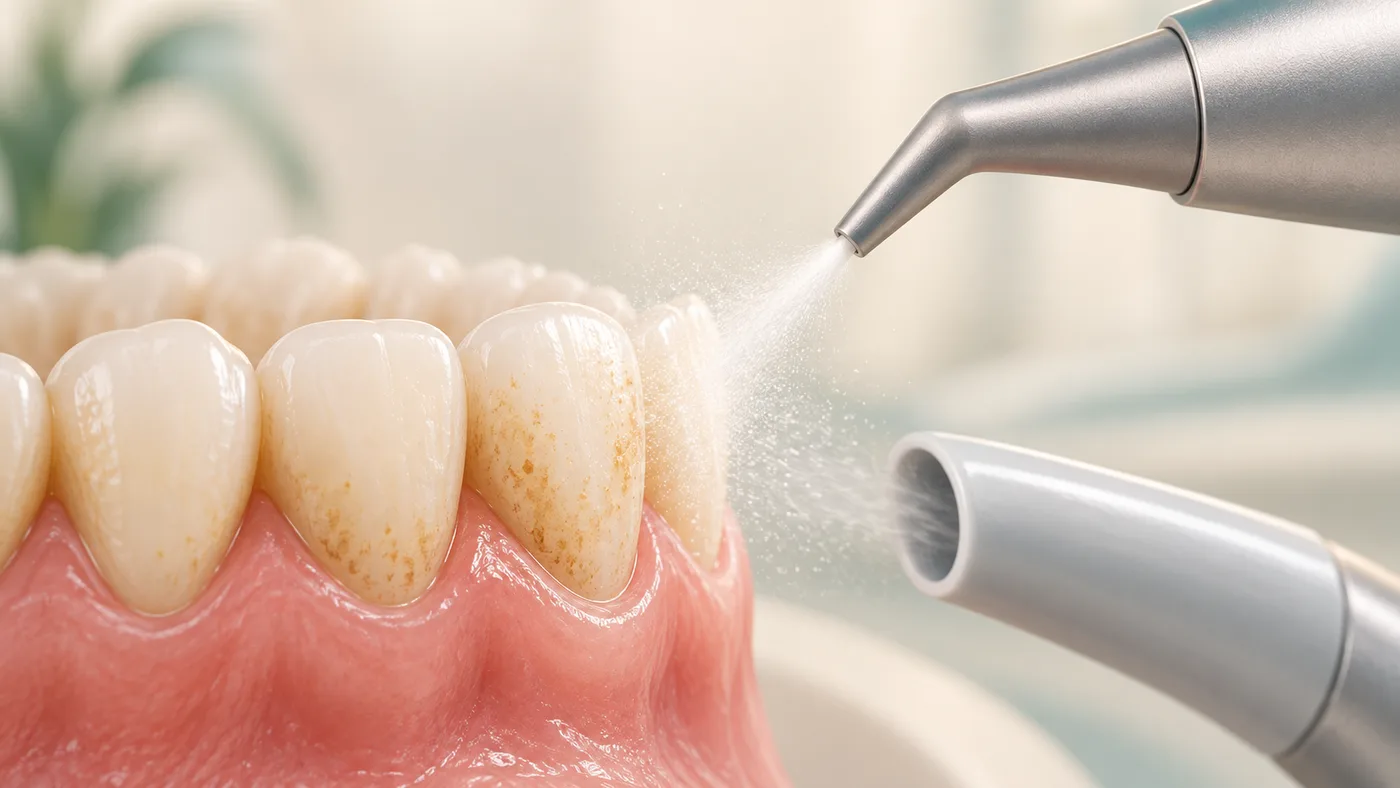
Tea, coffee and tobacco can contribute to external staining. Air polishing uses a controlled mixture of air, water and powder to remove suitable deposits or stains. Removing a surface stain can make teeth look cleaner, but it does not mean the natural tooth shade has been chemically lightened.
Whitening uses a different mechanism and needs a separate assessment. It also does not change the colour of existing crowns and fillings in the same way as natural teeth.
It does not replace every cleaning instrument
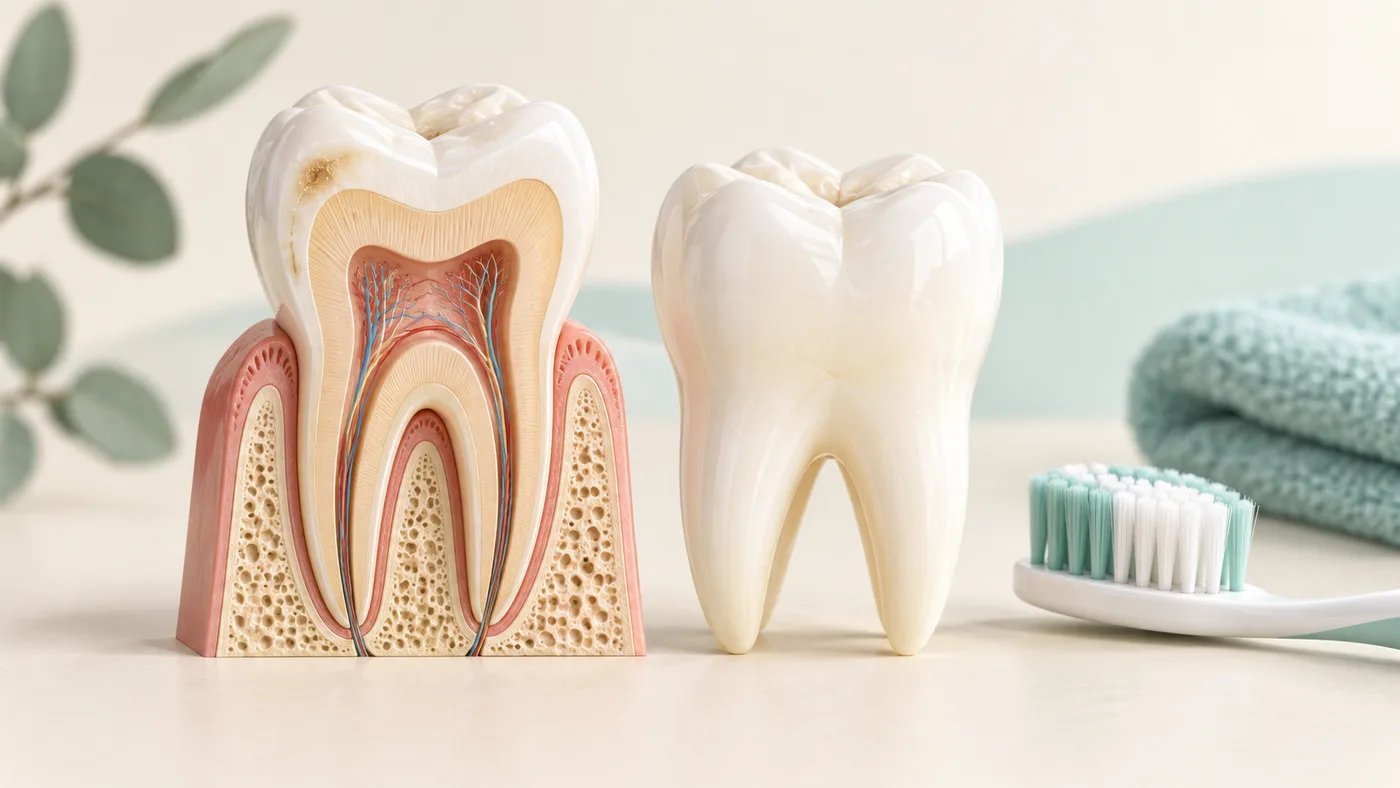
Hardened calculus may require other professional instruments. Gum disease treatment also depends on the location and severity of disease, not simply the appearance of the teeth after polishing. A visibly clean surface is not proof that pockets beneath the gum are healthy.
Powder and nozzle selection matter
Different powders and systems have different indications. A device or powder intended for surfaces above the gum is not automatically suitable beneath the gum or around implants. The clinician must follow the specific product instructions and protect surrounding tissues.
Discuss respiratory conditions and relevant medical or dietary restrictions. For example, sodium-containing powders require attention to the restrictions listed for that product. This does not mean all air-polishing powders have identical contraindications.
What to expect from a sensible plan
The team examines your teeth and gums, identifies the deposits and chooses suitable instruments. Tell them about sensitivity and existing restorations. If your main concern is colour, discuss the difference between cleaning, whitening and replacing a discoloured restoration before committing to treatment.
Daily brushing and cleaning between teeth remain essential after professional care. Frequent polishing cannot compensate for untreated gum disease or a home-care routine that leaves plaque behind.