
Identify the reason for discoloration
Surface staining, natural tooth color, old restorations, and discoloration within a tooth need different approaches. A single dark tooth should be assessed rather than repeatedly bleached without a diagnosis.
Professional planning
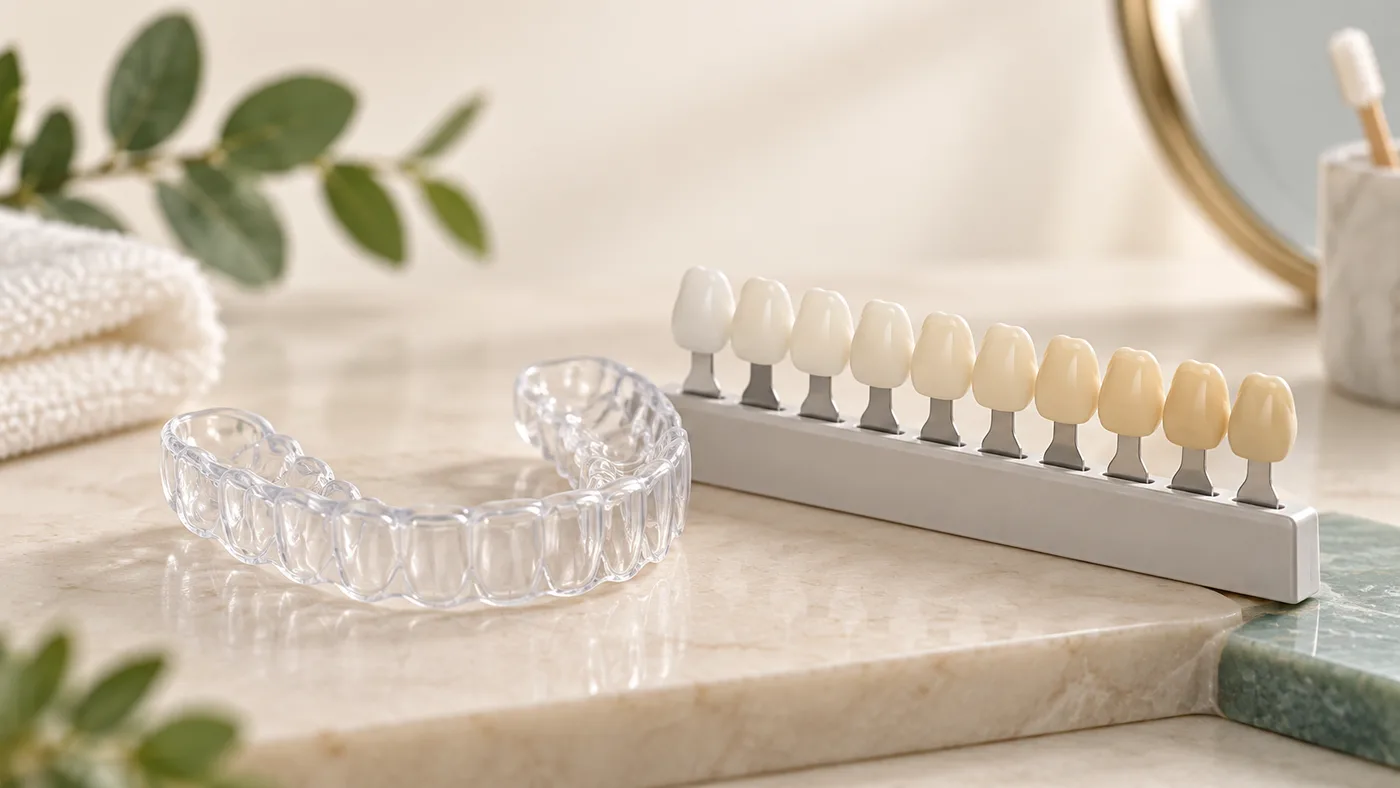
The dentist checks for decay, exposed roots, sensitivity, gum inflammation, and existing restorations. Options may include supervised home trays or an in-office procedure, depending on suitability.
What whitening cannot do
Crowns, veneers, and tooth-colored fillings do not whiten like natural enamel and dentine. A change in natural tooth shade may make an existing restoration more noticeable. Results vary and may fade with time.
Possible side effects
Temporary sensitivity and gum irritation can occur. Stop and seek advice if symptoms are significant. Follow the prescribed product and wear instructions; stronger or longer use is not automatically safer or more effective.
Avoid improvised methods
Do not use household bleach, acids, or abrasive mixtures on teeth. Ask about timing if you are pregnant, breastfeeding, underage, or undergoing other dental treatment; elective whitening may need to be deferred.