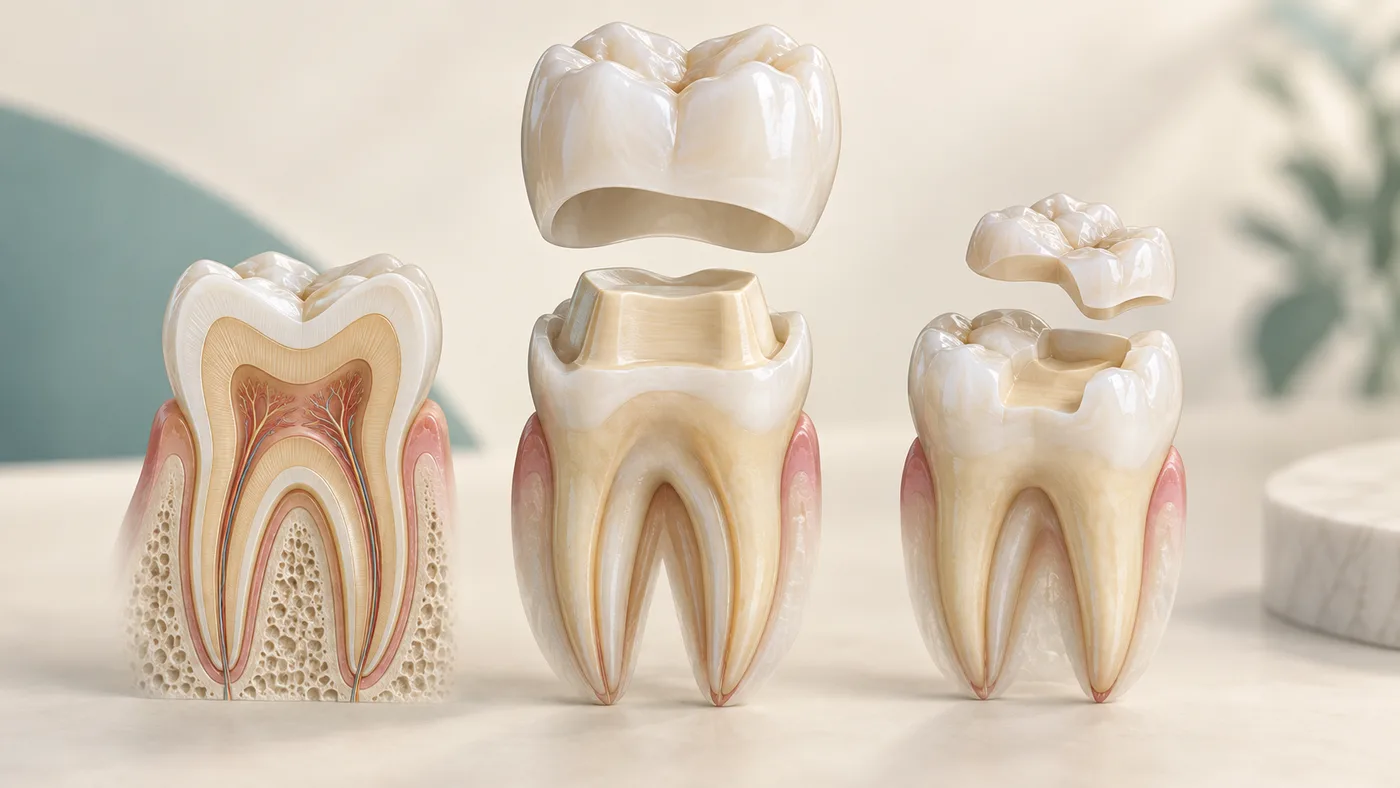
A material name is not a treatment plan
Zirconia and lithium disilicate are different ceramic families. IPS e.max is a commercial system that includes lithium-disilicate products; a brand name should not substitute for identifying the exact material and indication. Both appearance and mechanical behaviour vary with the product, thickness and design.
Where the differences matter
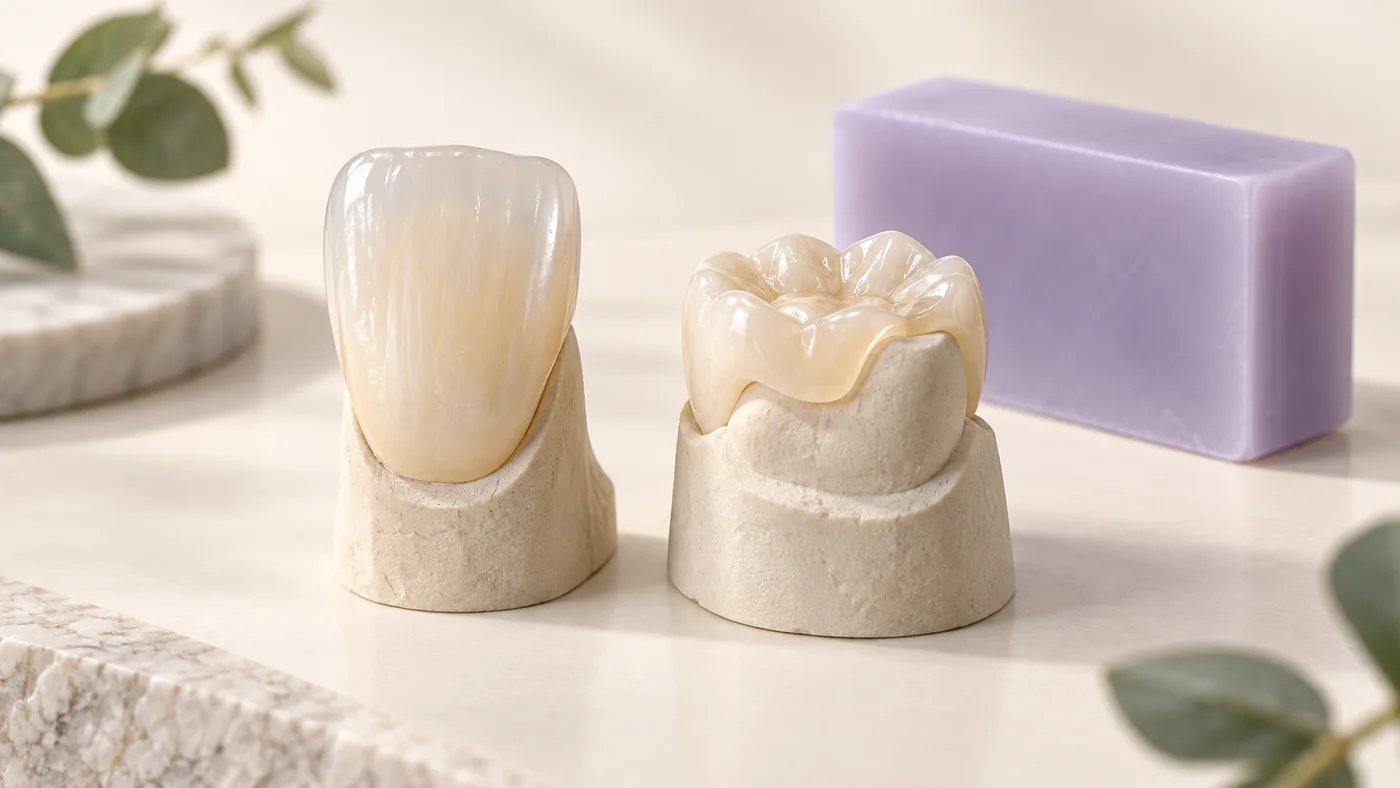
Lithium disilicate can offer useful optical properties and adhesive options in suitable restorations. It is not limited to front teeth, but its indications have boundaries. Zirconia products differ in strength and translucency; it is inaccurate to describe all zirconia as opaque or all translucent grades as mechanically identical.
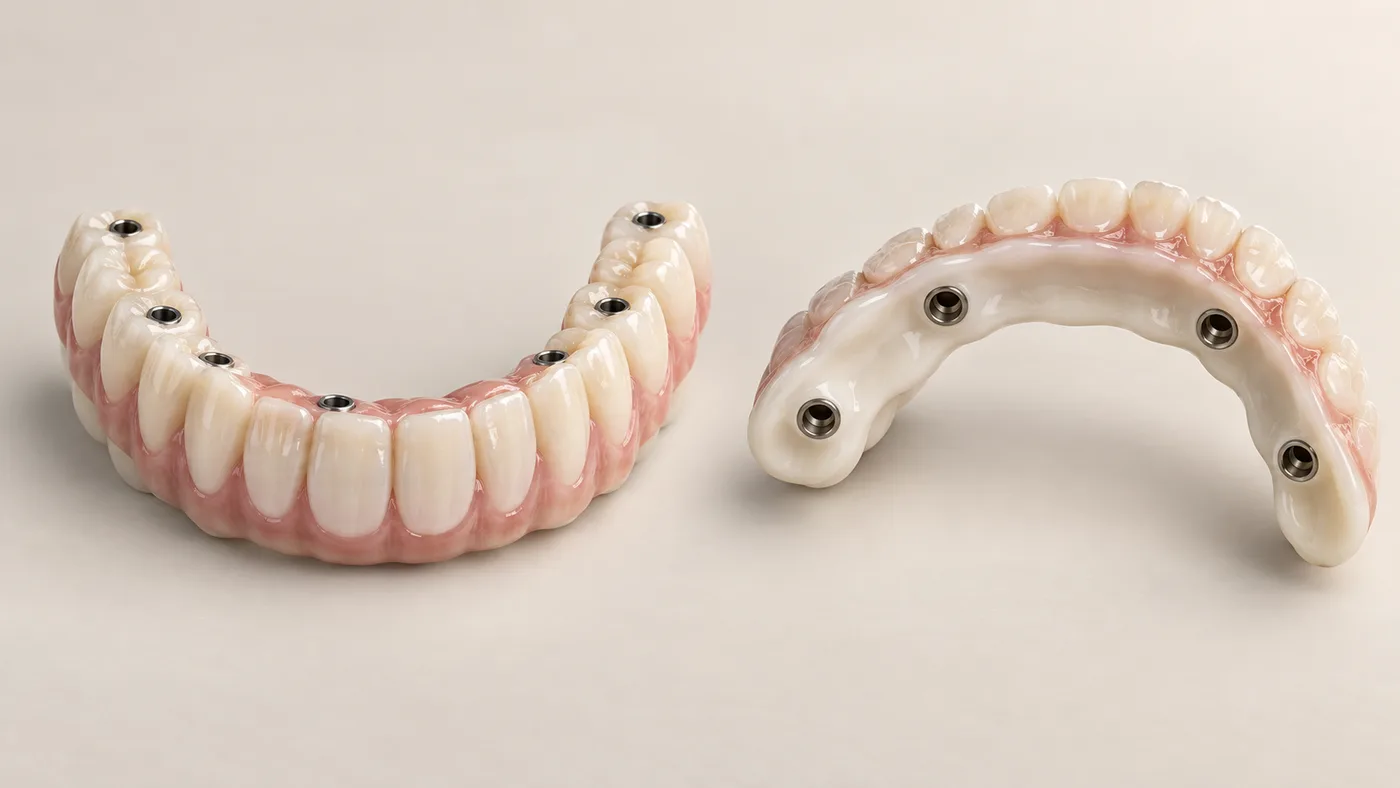
A single crown, a veneer, a short bridge and a full-arch implant bridge place different demands on a material. Evidence for one design should not be extended to another.
The tooth and bite come first
The dentist considers the amount and quality of remaining tooth, available space, the colour to be masked, margin location and ability to isolate the area. Grinding, the opposing teeth and bridge span may influence the choice. Preparation must respect the selected restoration's requirements while conserving tissue where possible.
A thicker or stronger-looking crown does not overcome untreated decay, poor support or an unsuitable bite.
Attachment and finishing
Bonding and cementation procedures differ by material and clinical situation. Surface treatment must follow the relevant instructions. The final contour, contact points and polished surfaces matter to comfort, hygiene and opposing teeth.
What to ask
Ask why a material fits your particular tooth, whether a more conservative restoration is possible and how the plan changes if the tooth is darker or weaker than expected. No ceramic is unbreakable, maintenance-free or guaranteed allergy-free. A well-chosen material is one part of a well-executed restoration.