Digital manufacturing starts with a clinical decision
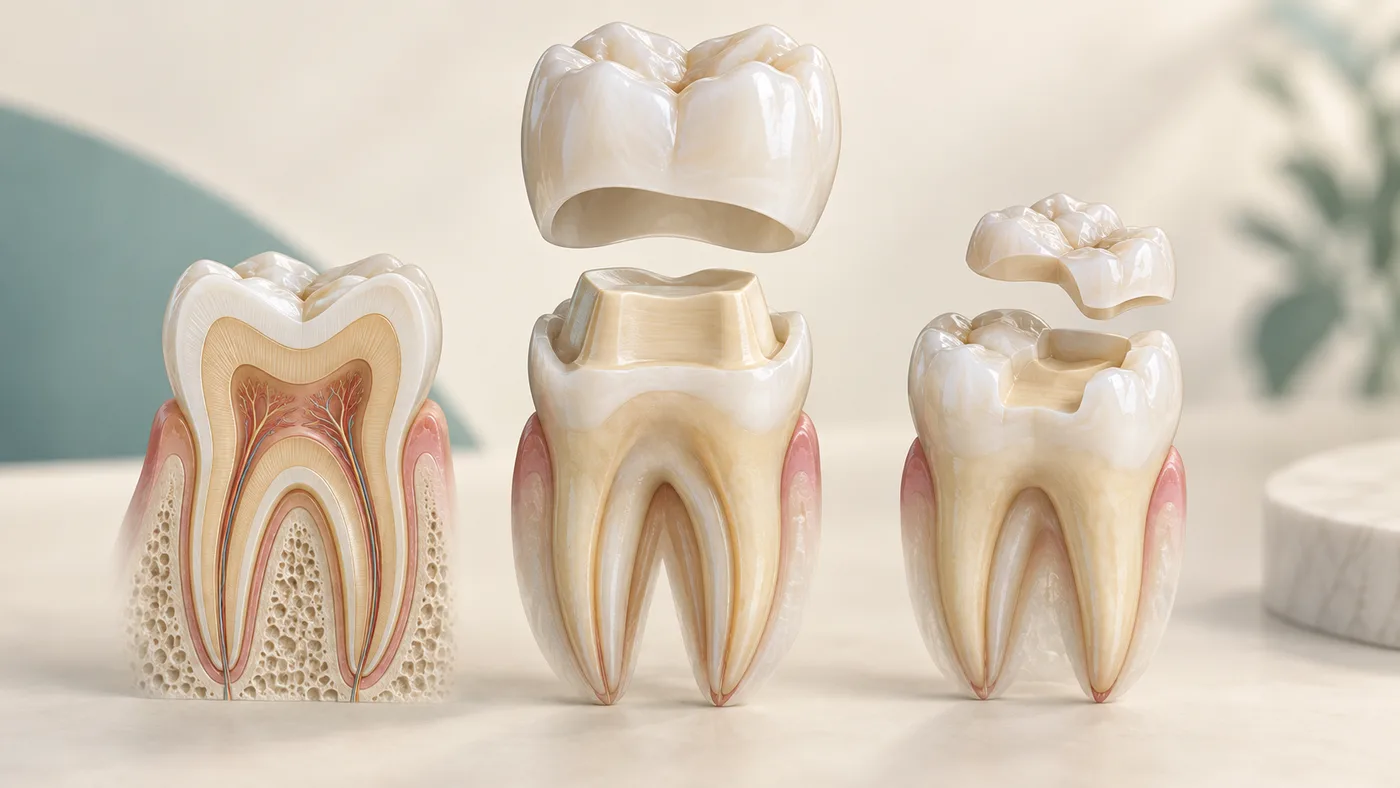
CAD means computer-aided design; CAM means computer-aided manufacturing. These tools help produce a restoration, but they do not decide whether a tooth needs a crown. The dentist first considers remaining tooth tissue, cracks, decay, existing restorations, gum health and the bite. A filling or partial-coverage restoration may sometimes preserve more tissue.
Records and preparation
Where a crown is appropriate, the tooth is prepared for the selected material and the margin must be recorded clearly. The laboratory needs the prepared tooth, neighbouring teeth, opposing arch, bite and shade information. A temporary restoration may protect the tooth while the final one is made.
Design, manufacture and finishing
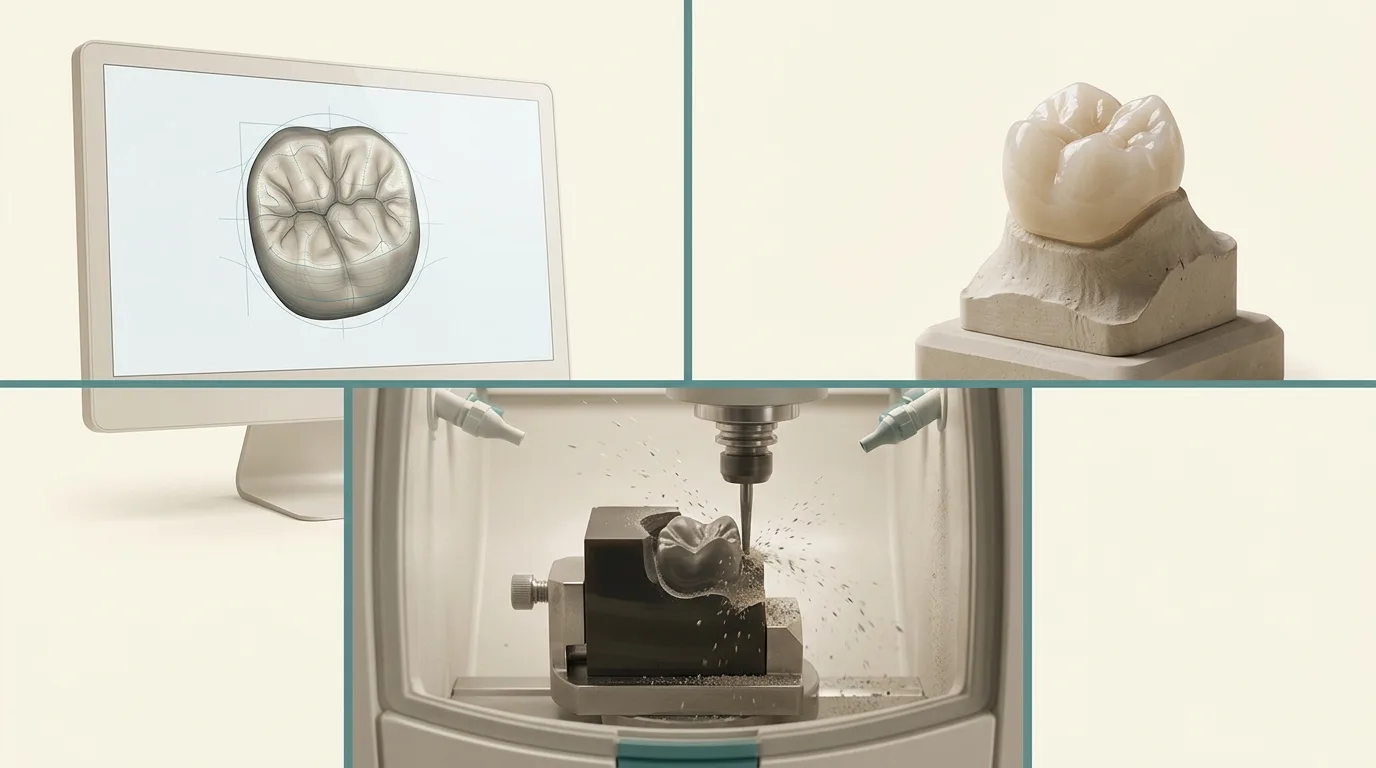
The proposed crown is designed on a digital model. The team checks material thickness, contacts, contours and available space. Manufacturing can involve milling an appropriate block or disc. Subsequent processing varies: some ceramics need crystallisation or sintering, followed by finishing, polishing or characterisation.
Not every step occurs inside the clinic. A dentist and laboratory can work digitally across separate locations. The existence of CAD/CAM equipment alone does not prove that a clinic offers every material or same-day delivery.
Why the fitting appointment still matters
The dentist checks seating, margins, contacts, bite and appearance before definitive attachment. Cementation or bonding follows the requirements of the restoration and tooth. A crown should not be accepted simply because software marked the design as complete.
Can my crown be finished in one visit?
Sometimes a suitable case and workflow allow it. Tissue condition, complexity, laboratory stages and the need to test appearance or function can require additional visits. Ask about the reason for the recommended material, the role of a temporary crown, expected appointments and the plan if the fit or appearance needs adjustment.