Why retention matters
Teeth can change position after active orthodontic treatment and throughout life. Retention is therefore a continuing part of care, not an optional extra for people whose teeth were severely crowded. Your orthodontist provides an individual wear schedule and explains how long it should continue.
Three common designs
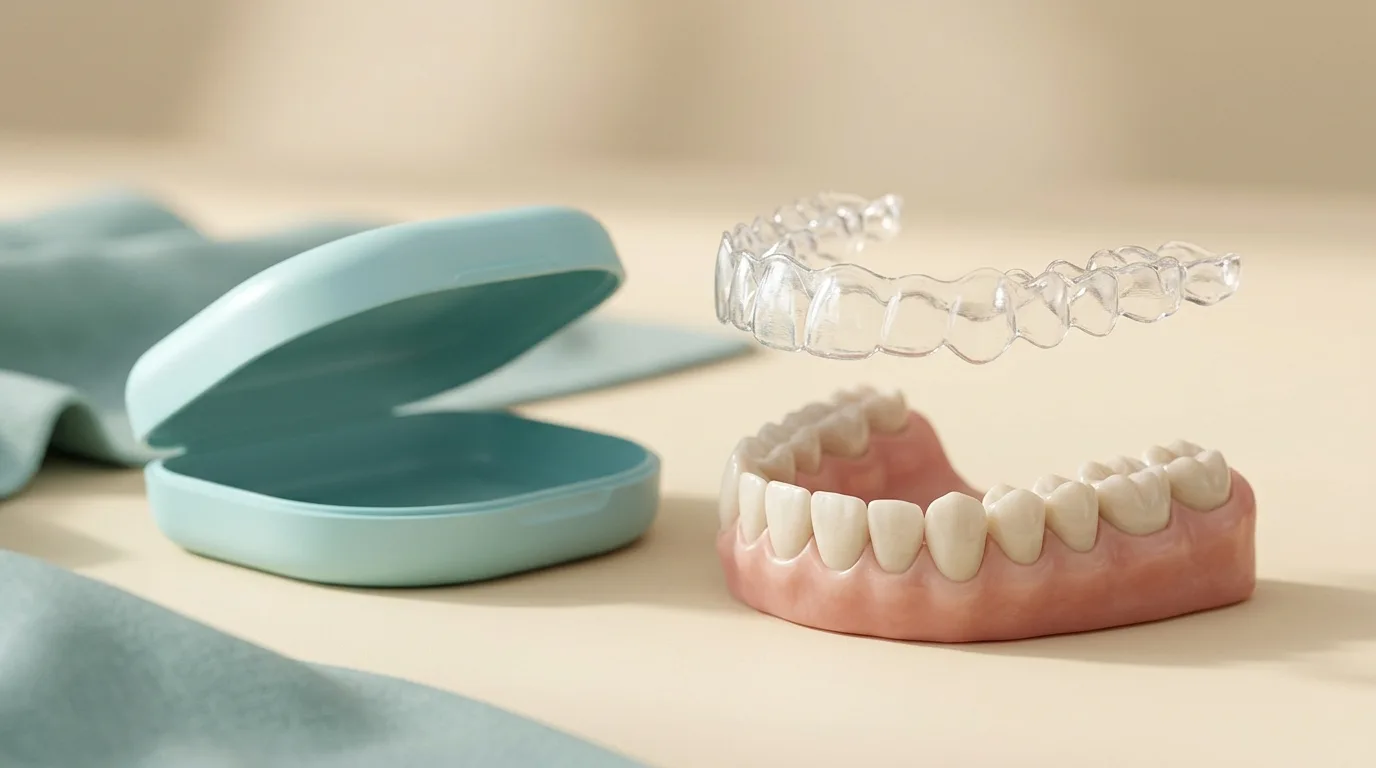
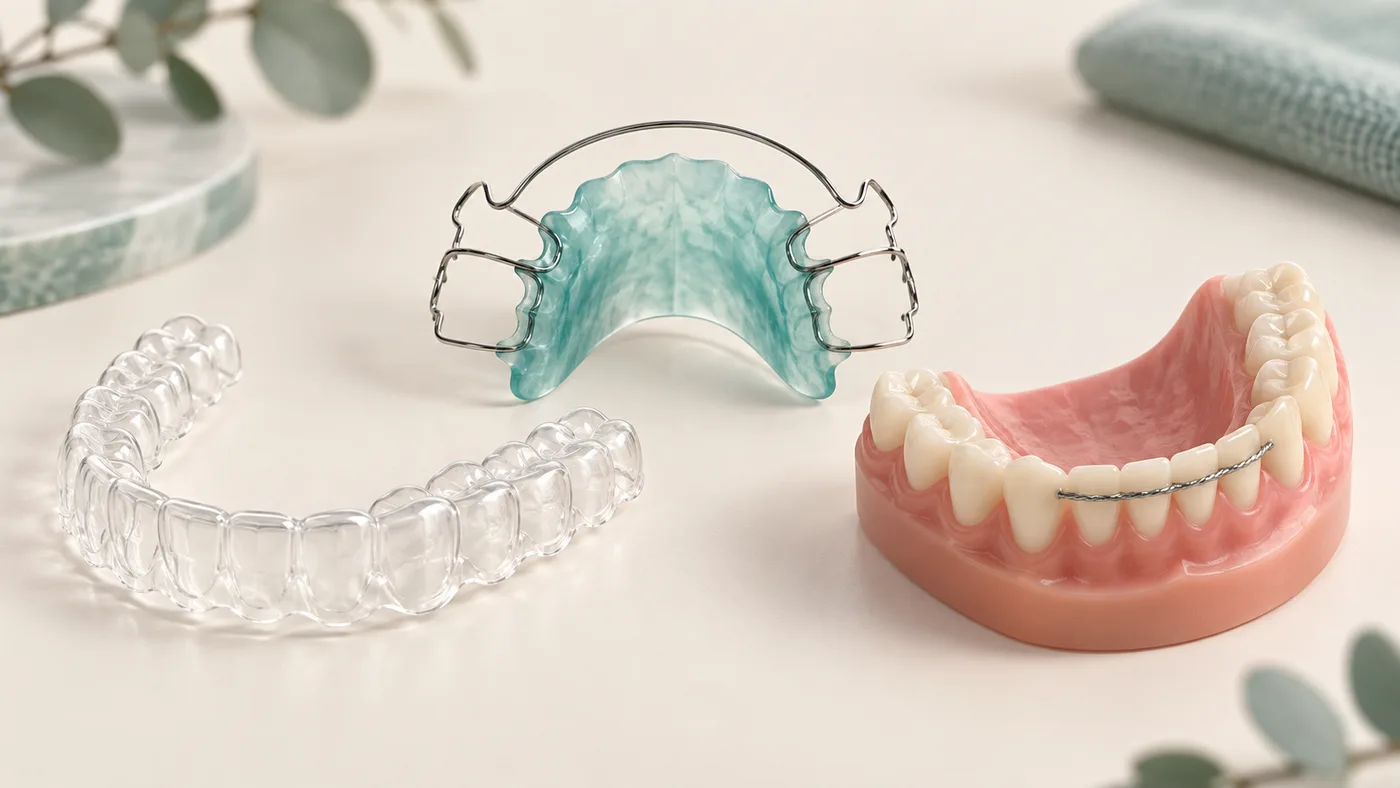
A clear vacuum-formed retainer covers the teeth with a thin shaped shell. A Hawley retainer uses an acrylic component and wire. Both are removable. A bonded retainer is a wire attached to the inner surfaces of selected teeth. It remains in place, but it does not make the entire bite immune to movement.
Some patients need a combination. The choice depends on the original problem, bite, hygiene, appliance condition and likelihood of following the wear instructions.
Cleaning and storage
Clean removable retainers regularly using the method recommended for their material. Use cool or lukewarm water; heat can distort a plastic appliance. Avoid harsh chemicals and abrasive products unless specifically approved. Put the retainer in its protective box rather than wrapping it in tissue or leaving it where a pet can reach it.
Clean carefully around a bonded wire and between teeth with the aids demonstrated by your team. A fixed retainer still needs daily cleaning and checks for loose bonding, deposits and tooth movement.
If the fit changes
Contact the orthodontic team if a retainer cracks, is lost, becomes unusually tight or does not seat fully. Do not force it, reshape it with hot water or glue a detached wire yourself. A broken bond can be difficult to see and may permit an individual tooth to move.
Is a retainer a night guard?
Not automatically. A retainer maintains tooth position; a guard may be designed for a different problem such as protecting teeth affected by grinding. Tell the dentist if you grind, receive new restorations or plan whitening so that appliances remain compatible.