
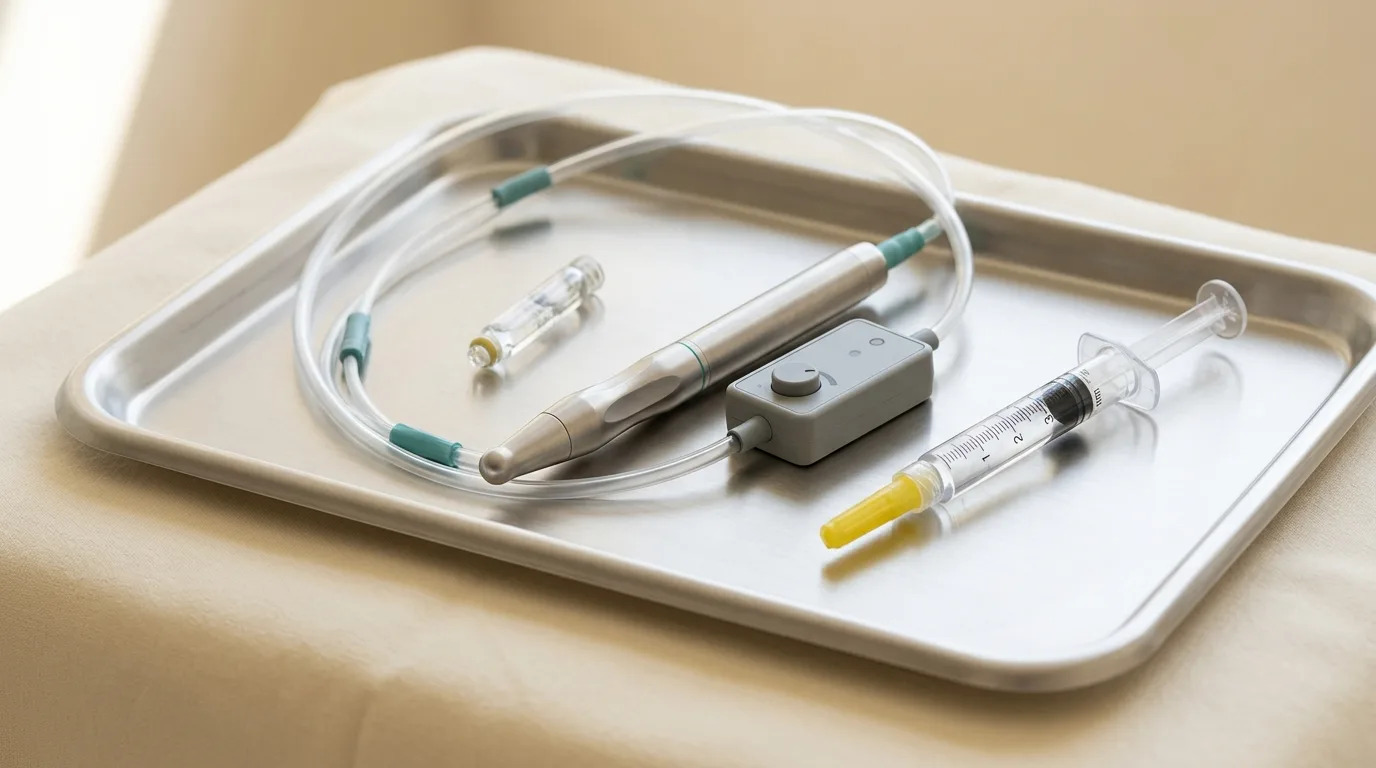
Controlled delivery, not a different kind of anaesthetic
A computer-controlled local anaesthetic delivery device regulates how solution enters tissue. A pen-shaped handpiece can look less intimidating than a conventional syringe. Depending on the system and injection technique, controlled flow may reduce discomfort associated with depositing solution.
It usually still uses a needle. It does not make every injection painless, and the anaesthetic medicine still requires the same careful selection and dose calculation. One study of a particular device or injection site cannot establish that all devices work equally well in every situation.
Why injections can feel uncomfortable
Needle entry, tissue pressure, injection speed, inflammation and anxiety all affect the experience. Topical anaesthetic may help with surface sensation, while communication and a slow, careful technique also matter. Changing the device does not replace these steps.
How the dentist checks that you are ready
The area needs time to become numb. The dentist tests the effect and may adjust the technique if anaesthesia is incomplete. Inflamed teeth can be more difficult to anaesthetise; this is a clinical challenge rather than proof that a device has failed. Pressure during treatment may still be noticeable, but sharp pain should be reported.
Does it wear off sooner?
Not necessarily. Duration depends on the medicine, amount, location and individual response. Avoid biting the lip or cheek and take care with hot food or drinks while numb. Children need appropriate supervision. Suitability for a child depends on assessment, not a blanket promise that a device is safe for every age.
Ask which injection is planned, how comfort will be assessed and what alternatives are available. The aim is effective anaesthesia delivered thoughtfully, rather than a guarantee based on the shape of the handpiece.