
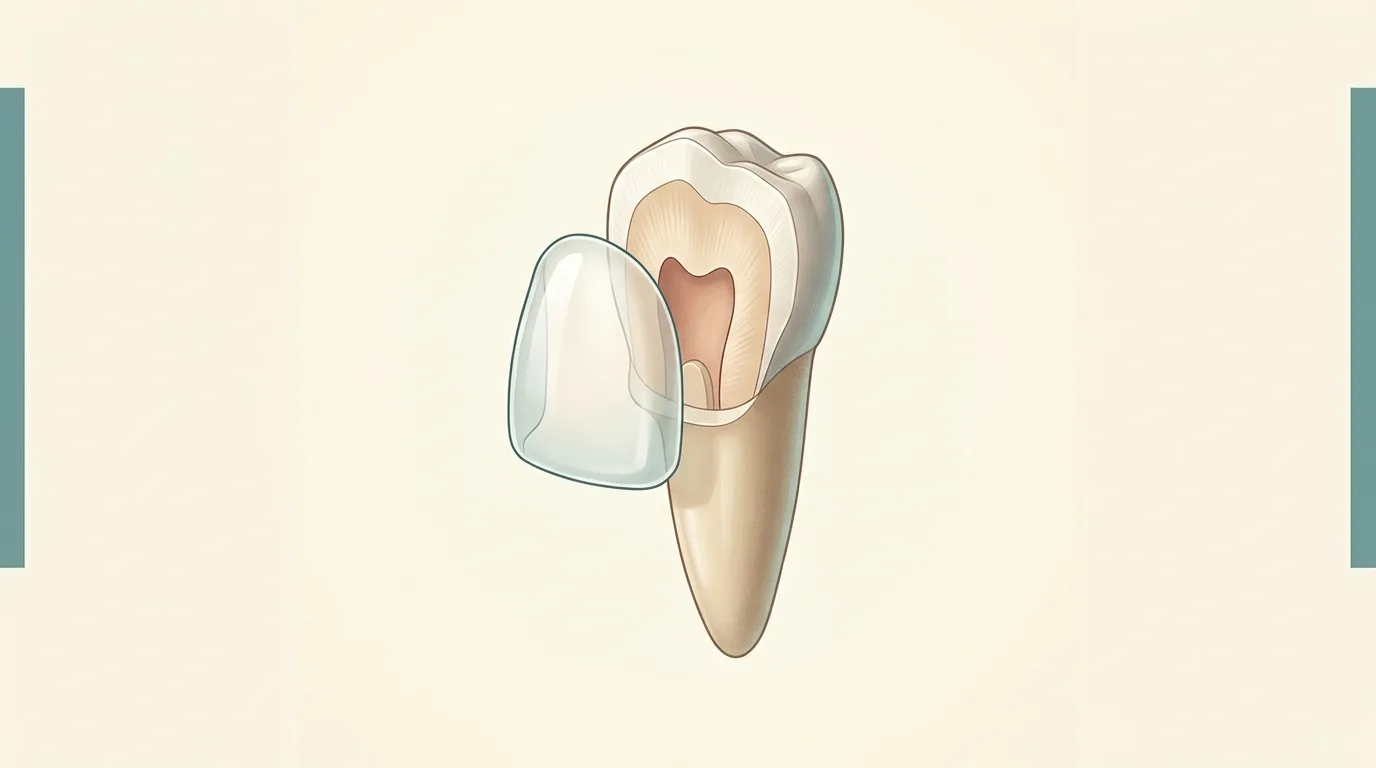
What a veneer changes
A veneer covers mainly the visible front surface of a tooth to modify selected aspects of shape or color. Ceramic and composite options differ in preparation, repairability, cost, and long-term behavior.
Suitability depends on the tooth
The clinician considers enamel available for bonding, existing fillings, decay, gum health, bite, and grinding. Very damaged teeth may need a different restoration; healthy but misaligned teeth may benefit from orthodontics instead.
The treatment sequence
Assessment and design come first, followed by any necessary preparation, records, trials, and bonding. Where tooth tissue is removed, that change is permanent. “No-prep” treatment is suitable only when adding material will not create bulky or unhygienic contours.
Care and limitations
A veneer can chip, debond, stain at its margins, or need replacement. The underlying tooth remains vulnerable to decay. Maintain daily cleaning, avoid using teeth as tools, and discuss protection if grinding is present.
Veneer or crown?
A veneer primarily covers the front; a crown provides more extensive coverage. More coverage is not automatically better—choose it for a clinical reason.