
Begin with your priorities
Comfort, preservation of neighboring teeth, surgery, treatment time, cleaning, and cost may influence your choice. A missing-tooth space does not always have one best answer.
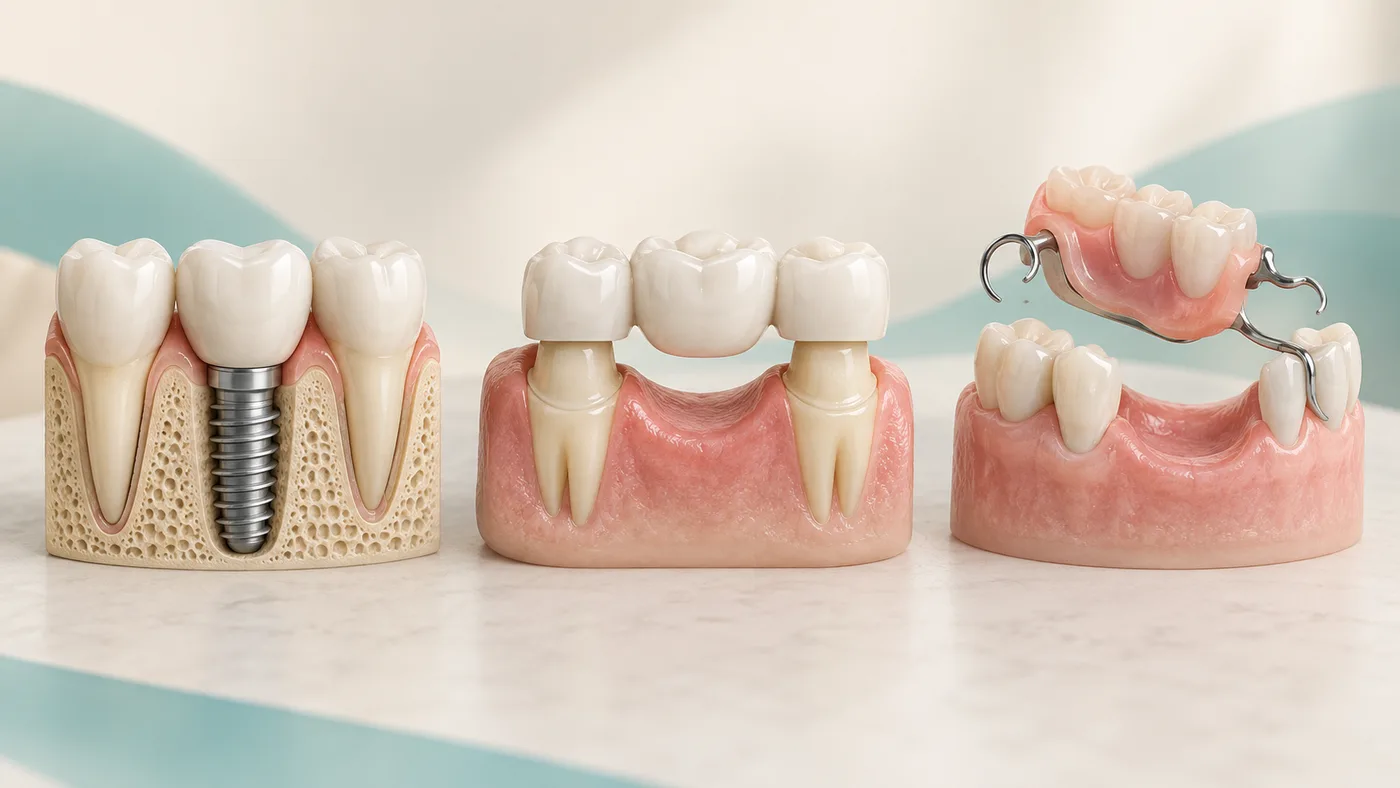
| Option | Main consideration |
|---|---|
| Implant-supported tooth | Uses support in the jaw; requires suitability assessment, surgery, and ongoing tissue care |
| Tooth-supported bridge | Uses neighboring teeth; may require preparation and special cleaning beneath the replacement tooth |
| Removable denture | Can replace several teeth and tissues; removed for cleaning and may need adaptation or adjustment |
Consider the supporting teeth
A bridge plan differs when adjacent teeth already need crowns versus when they are intact. An implant plan differs when bone and soft tissue are favorable versus when additional surgery is required.
Look beyond the first day
Ask how each option can be cleaned and repaired, how it affects future treatment, and whether leaving the space under observation is reasonable in your particular bite.
A clinical examination is needed to turn this comparison into a recommendation.
Assess the remaining teeth and the whole mouth
Preparing an intact neighbour for a bridge differs from using a heavily restored tooth as support. The condition of those teeth, gum disease, bite and future treatment needs can change the preferred option. With extensive tooth loss, compare lip support, speech and cleaning access alongside appearance.
Make the choice practical
Ask the dentist to show the design on a model or your records, demonstrate cleaning and explain possible repairs. With an implant option, clarify whether you remove the teeth yourself. The word “implant” alone does not establish whether the restoration is fixed or removable.