Define the prosthetic endpoint
Begin with the intended tooth position, lip support, restorative space, occlusal scheme and hygiene access. Distinguish patient-removable and fixed options before selecting fixture positions. Identify which expectations cannot be met by a proposed design.
Evaluate biological readiness
Assess active disease, periodontal history, soft-tissue phenotype, hard-tissue dimensions and relevant medical risks. The planning record should explain why extraction, preservation, augmentation or staged care is proposed.
Verify records and transfer
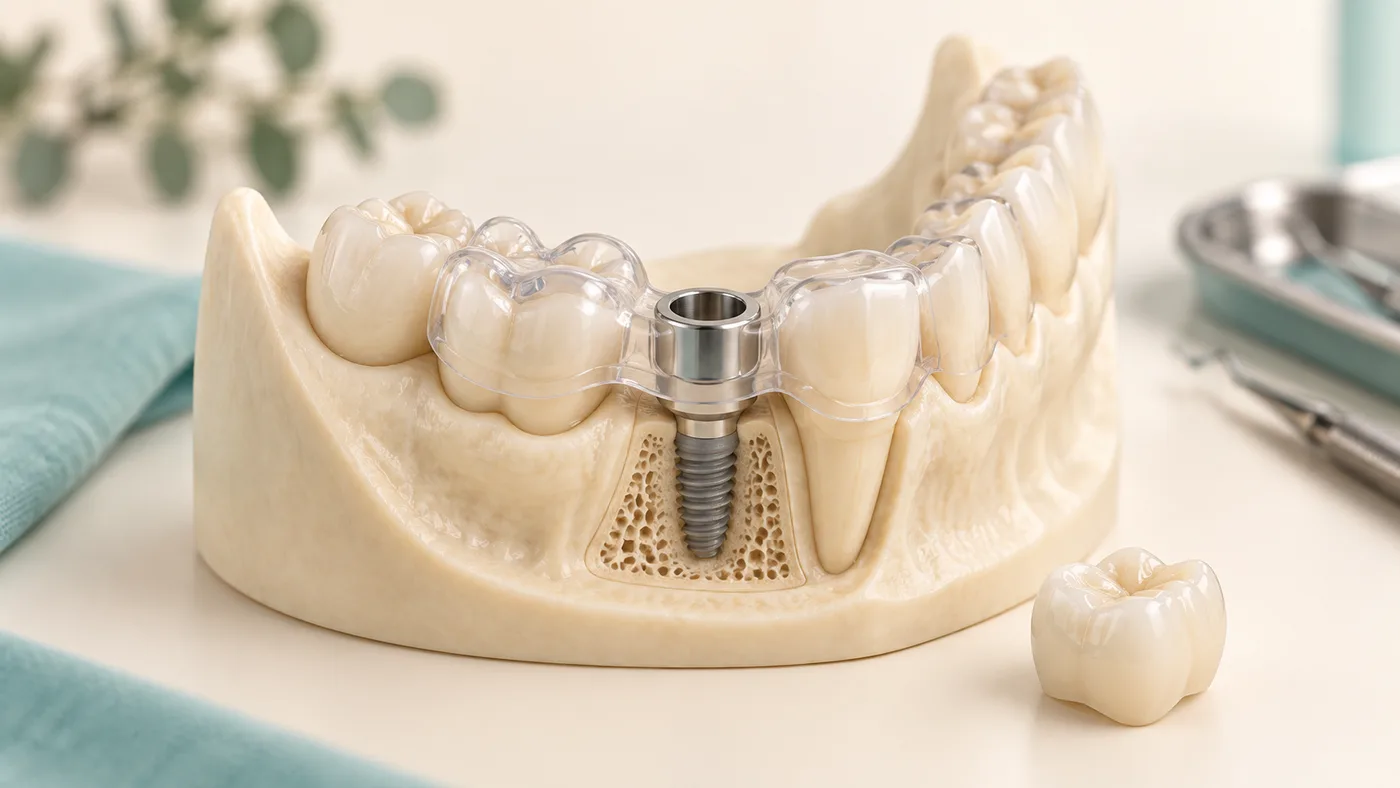
Surface scans and radiographic datasets have different limitations. Confirm their accuracy and registration before relying on a guide. Consider guide support, seating, fixation where appropriate, access and the possibility of changing the surgical approach.
Separate placement and loading decisions
Immediate placement, immediate restoration and immediate functional loading are not synonyms. Predefine criteria for the provisional pathway and a contingency if intraoperative findings do not support it.
Plan maintenance before manufacture
Review emergence contours, access beneath the prosthesis, retrievability and availability of replacement components. Record baseline findings and design recall around risk. An attractive definitive restoration is not an adequate endpoint if the patient cannot maintain it.
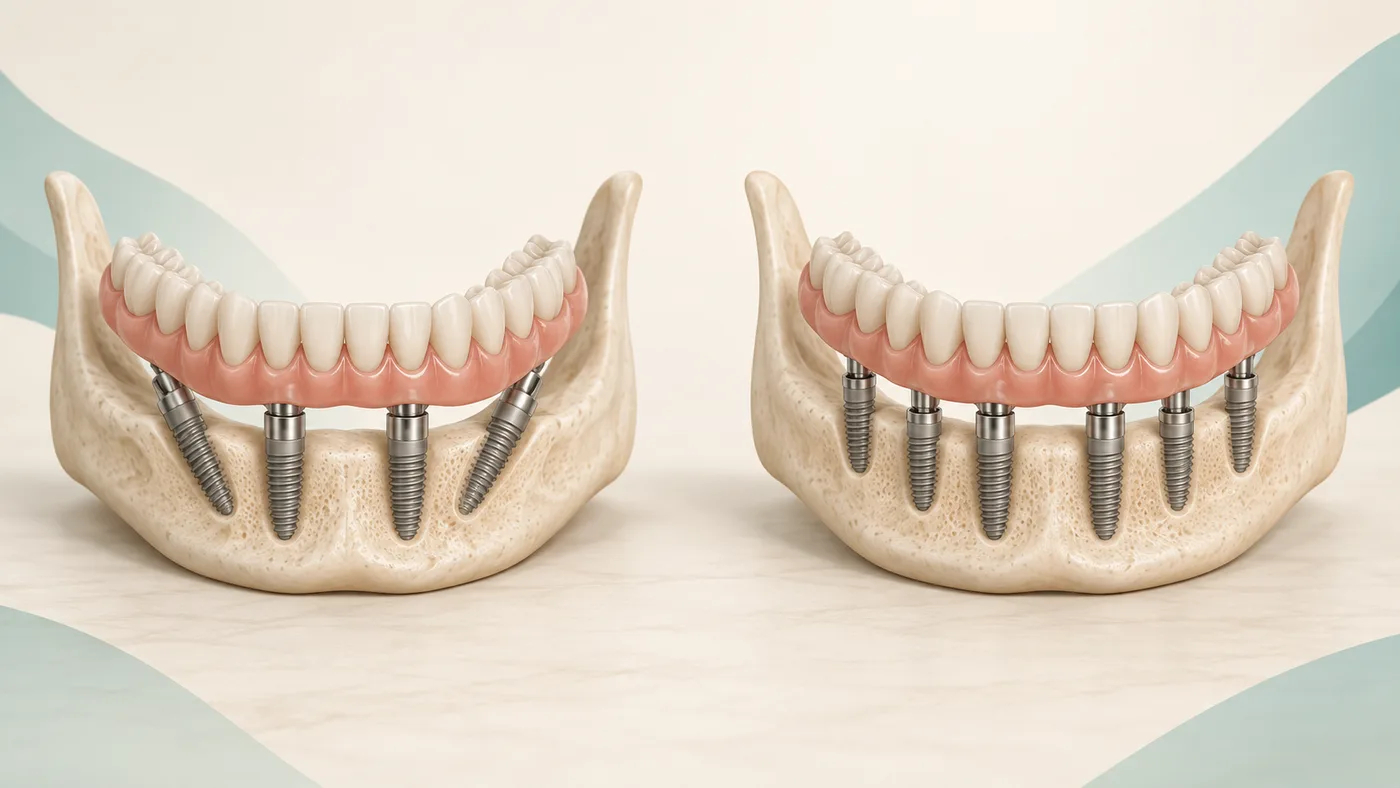
Discussion exercise: Compare two plausible designs for the same edentulous jaw. Explain the consequences for lip support, implant distribution, cleaning, repair and the response to a single-component failure. Do not select a design from implant number alone.